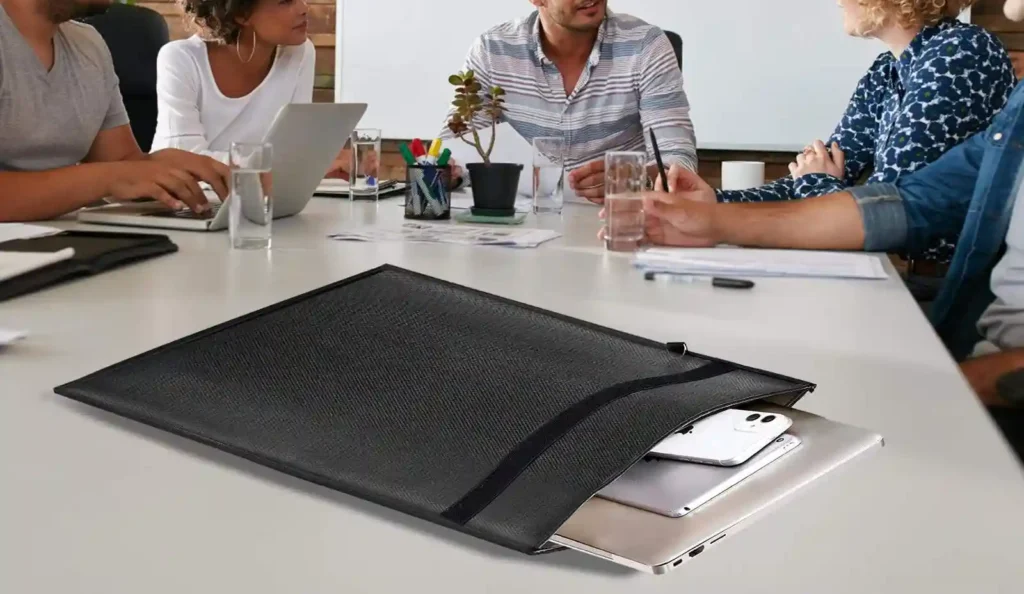
The rapid proliferation of the Internet of Things (IoT), coupled with the evolution of 5G and 6G telecommunications, has shifted electromagnetic security from a specialized military concern into a fundamental aspect of civil and commercial infrastructure. Addressing a wide array of threats, from relay attacks targeting keyless vehicle entry systems and RFID skimming of financial instruments to preventing unauthorized tracking or eavesdropping on sensitive institutional assets, Faraday shielding solutions have evolved from niche technologies into essential industry-standard safety protocols. The adoption of Faraday bags for phones and RFID blocking pouches now forms a critical part of personal and institutional cybersecurity defenses.
1. Global Market Dynamics and Demand Evolution
1.1 Critical Requirements in Forensic and Law Enforcement Sectors
Global judicial and forensic protocols necessitate the immediate isolation of seized mobile devices and computing hardware within high-attenuation shielding enclosures to preclude the possibility of remote data eradication. The prevention of cloud-initiated wipe commands is paramount to preserving the integrity of the digital chain of custody, as any breach in signal isolation could result in the permanent loss of evidentiary data. Institutional stakeholders in these sectors demand a degree of structural stability and abrasion resistance that far exceeds the specifications of consumer-grade alternatives.
1.2 Security Standardization within the Automotive and Insurance Ecosystems
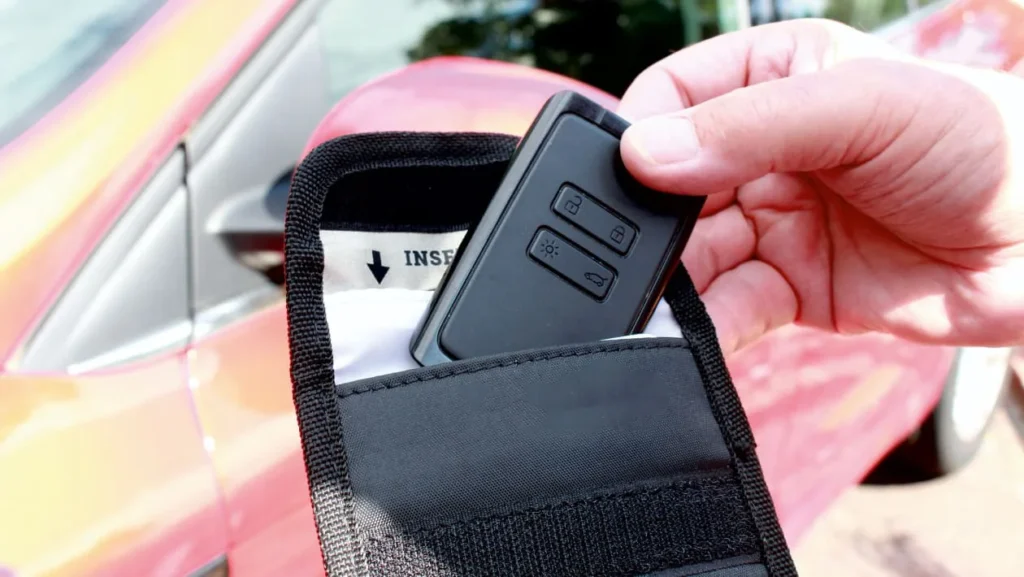
The widespread use of smart key systems in vehicles has coincided with an increase in relay attacks utilizing signal amplifiers. This has prompted insurers to advocate for the inclusion of farady bags as standard equipment to reduce theft-related loss ratios. Rising premiums within automotive leasing, high-end logistics, and secondary markets—driven by vulnerabilities in keyless entry systems—have spurred strategic collaborations between Faraday bag manufacturers and insurance providers. Procurement of these signal-blocking solutions is now viewed as a dual-purpose safeguard: neutralizing theft risks while demonstrating proactive risk mitigation, which can lead to reduced insurance premiums. Furthermore, the digitization of electric vehicles has driven demand for Faraday bags for phones and RFID blocking pouches to secure signal isolation during transit and prior to over-the-air (OTA) firmware updates.
1.3 Corporate Espionage Mitigation and Executive Data Sovereignty
Technological vulnerabilities inherent in smartphones and wearable devices are prime vectors for data leakage during high-stakes multinational commercial negotiations. In response, many organizations have implemented large-scale deployments of customized Faraday bags to establish a physical “air-gap” during sensitive proceedings. Across North American and European markets, the demand for privacy Faraday bags and phone Faraday bags has extended beyond security departments into broader corporate strategies. With remote work security and counter-espionage becoming core Key Performance Indicators (KPIs) for global enterprises, the focus has shifted toward providing executive leadership with Faraday shielding kits that prevent unauthorized signal access from Bluetooth or RFID-enabled employee wearables. This transition reflects the physicalization of digital threats, as these methods can be exploited to monitor movement or facilitate unauthorized audio surveillance. As a result, RFID blocking pouches and RF shielding bags have become crucial in maintaining corporate data sovereignty and safeguarding sensitive business information from external espionage.
2. Technical Core: Why “106dB” Represents the Definitive Benchmark for Electromagnetic Protection
Within the specialized signal-shielding industry, performance integrity is dictated by rigorous physical parameters rather than speculative marketing. A common misconception among institutional procurement entities is that basic Bluetooth disconnection equates to sufficient protection—a fallacy that poses significant operational risks in professional signal-contested environments.
2.1 Shielding Effectiveness (SE): Logarithmic Precision and the 106dB Threshold
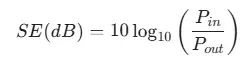
SShielding Effectiveness (SE) quantifies a material’s capacity to attenuate electromagnetic waves, governed by the logarithmic ratio between incident power ($P_{in}$) and transmitted power ($P_{out}$):
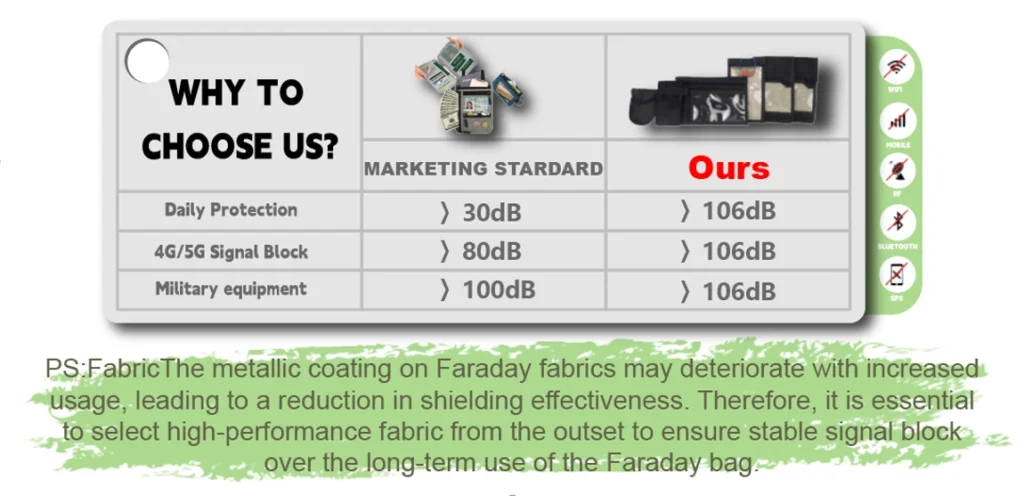
The transition from a market-standard 80dB to a high-performance 106dB represents a profound leap in defensive capability. While 80dB reduces signal strength by $10^8$ (99.999999%), 106dB achieves a reduction of approximately $4 \times 10^{10}$. This nearly 400-fold increase in shielding power provides the critical redundancy required to withstand the intense radiation fields generated by 5G micro-cells and millimeter-wave (mmWave) hardware at close range (0.5m–5m), maintaining a state of “absolute digital silence.”
Full-Spectrum Block Capabilities:
Low Frequency (LF/HF): Absolute neutralization of 13.56MHz RFID/NFC unauthorized scanning.
Ultra-High Frequency (UHF): Total isolation of 4G/5G cellular networks and GPS L1/L5 positioning signals.
Super-High Frequency (SHF): Future-proofed attenuation for mmWave bands and emerging 6G protocols.
2.2 Seam Integrity and the Physics of Aperture Leakage
High-performance textiles alone do not inherently guarantee a high-performance enclosure due to the “Aperture Leakage” phenomenon. Standard industrial stitching creates microscopic perforations that act as waveguides, allowing high-frequency electromagnetic waves to diffract and penetrate the interior. This issue is particularly critical for EMP protection bags, EMF shielding, and other faraday bags where complete signal isolation is paramount.
To counteract this, our engineering utilizes Faraday Conductive Folding techniques, where shielding textiles are rolled and overlapped multiple times rather than simply joined. This process ensures the continuity of the conductive path. In addition, high-conductivity metal fiber threads are integrated into all structural seams. This architecture maintains consistent electrical resistivity across the entire enclosure, eliminating the 30dB performance drop-off typically observed at the seam points of conventional electronic bags and RF shielding bags.
2.3 Dual-Layer Architecture: Reflection, Absorption, and Redundancy
The decision to utilize a dual-layer structure is based on advanced electromagnetic reflection and absorption models:
Primary Reflection and Secondary Dissipation: The exterior layer reflects over 90% of incident energy, while the remaining waves undergo multiple reflection interference within the narrow air gap between layers. The interior layer then acts as a definitive barrier, absorbing and dissipating any residual leakage, ensuring the efficacy of EMP proof bags, Faraday pouches, and signal-blocking pouches.
Structural Protection of Nano-Coatings: The efficacy of shielding cloth relies on deposited nano-scale silver/nickel coatings, which are susceptible to micro-fractures through repeated mechanical folding. These coatings are vital for products like Faraday backpacks, Faraday key bags, and RFID protected bags, where robust and long-lasting protection is crucial.
Dual-Redundancy Logic: Our architecture incorporates a “slip-compensation” function. Should the exterior layer sustain wear that reduces its effectiveness to 60dB, the interior layer remains shielded from mechanical stress, preserving its original high-gain attenuation. This master-slave redundancy extends the operational lifespan of the product by 200% to 300% compared to single-layer alternatives, making it far superior for use in EMP protection bags, electronics bags, and other Farady bags that require consistent performance.
2.4 Material Fortification: The Structural Superiority of 1680D Oxford Fabric
For enterprise and governmental procurement, material selection determines the operational ceiling of the security asset. In professional environments, 1680D Oxford fabric—a high-density, double-strand ballistic weave—serves as a “physical exoskeleton.” It provides the necessary tensile strength to prevent the distortion of delicate internal shielding fibers under stress. Furthermore, its PU/PVC-treated exterior provides a formidable barrier against moisture and oils, preventing the oxidation of internal metallic coatings—a process that would otherwise lead to an exponential decay in shielding performance.
3. Comparative Material Analysis and Structural Superiority
The longevity of a Faraday enclosure is fundamentally tied to its external substrate, which must safeguard the fragile internal conductive textiles against environmental and mechanical stressors. Selecting a high-performance material from the outset is essential to ensure stable signal isolation over the long-term use of the bag.
3.1 Material Performance Benchmarks for Institutional Procurement
Professional-grade signal isolation requires a substrate that exceeds standard consumer expectations for durability and protection.
Material Type
Current Industry Application
Core Advantages
Critical Procurement Deficiencies
PU Synthetic Leather
Consumer-level gifts and low-cost shielding pouches.
Stylish appearance, initial soft tactile feel, and extremely low cost.
Abbreviated Lifespan: Frequent folding leads to surface cracking and “peeling,” causing critical shielding failure at the closure. Susceptible to chemical degradation (stickiness) in high-heat or humid environments.
300D/600D Polyester
General-purpose backpacks and basic shielding pouches.
Lightweight profile with a diverse range of color options.
Insufficient Physical Defense: Low fiber density fails to provide adequate structural support for the internal conductive layers. Easily punctured by the sharp corners of devices (e.g., smartphones) from the interior.
Genuine Leather
Bespoke high-end privacy enclosures.
Premium texture providing a natural, prestigious aesthetic.
High Operational Maintenance: Shielding bags require airtight seals, but non-uniform leather thickness and high moisture absorption lead to mold. This chemically corrodes internal metallic coatings and results in excessive weight.
1680D Oxford Fabric
Military, forensic, and high-security professional enclosures.
Extreme abrasion resistance, superior structural rigidity, and resilience against environmental erosion.
Higher initial unit cost and complex manufacturing processes requiring specialized heavy-duty sewing equipment.
3.2 The Structural Value of 1680D in High-Security Environments
For enterprise and governmental procurement, operational reliability is the primary metric of value. High-quality 1680D Oxford fabric acts as a “physical exoskeleton” for the entire shielding system.
Shielding Integrity through Structural Reinforcement: Internal Faraday textiles utilize nano-metallic coatings that are susceptible to damage from mechanical stress. 1680D Oxford fabric provides the necessary high-tensile strength to absorb physical tension during high-frequency field operations, preventing the internal shielding layers from stretching or fracturing.
Optimal Seal Precision: Effective signal isolation is entirely dependent on the integrity of the enclosure’s seal. Unlike thinner, more pliable materials that can become loose or deformed, 1680D fabric maintains its folding memory, ensuring a precise and tight overlap at the closure even after tens of thousands of cycles.
Environmental Barrier for Conductive Layers: Conductive components like silver and nickel are prone to oxidation when exposed to moisture or perspiration, which leads to an exponential decay in shielding performance. The thick, PU/PVC-treated 1680D exterior creates a hydrophobic barrier, protecting the internal layers from chemical corrosion and maintaining “Day One” performance standards.
Sustainability of Branding and Asset Tracking: For institutional assets, branding must remain legible through heavy use. Unlike synthetic leathers where printed logos easily peel, the dense weave of 1680D fabric allows for deep fiber integration of high-frequency embossing and professional-grade printing, extending the visual lifespan of the organization’s identification markings.
3.3 Brand Equity and Institutional Representation
For institutional stakeholders and corporate entities, the visual representation of a logo serves as a definitive extension of organizational authority and professional image. The robust, high-density texture of 1680D Oxford fabric provides an ideal substrate for advanced branding techniques, including precision silk-screen printing, high-frequency debossing, and the integration of metallic identification plates.
Exceptional Graphic Longevity: Unlike synthetic PU leathers where surface-printed graphics are prone to delamination and peeling, the dense weave of 1680D fabric allows pigments and impressions to penetrate deeply into the fiber matrix.
Aesthetic Durability: This structural integration ensures that institutional branding remains legible and professional even after prolonged exposure to mechanical friction.
Operational Security through Visibility: Maintaining clear identification markings over time supports both organizational branding and the secure tracking of critical assets in the field.
4. Comprehensive Product Matrix: Omni-Dimensional Protection from Micro-Terminals to Mobile Security Systems
In professional procurement contexts, electromagnetic shielding has evolved into a “scenario-specific security utility.” Engineered with a core 106dB attenuation capacity, this matrix spans from individual identity authentication to enterprise-level hardware and integrated carry systems, offering specialized solutions such as Faraday bags, EMF protection bags, and signal-blocking pouches to address unique security needs.
4.1 Keyless Entry and Financial Instrument Series: High-Frequency Security Protocols
Targeting: Automotive dealerships, financial institutions, and executive hospitality.
Operational Pain Points: For automotive distributors and banks, shielding enclosures represent an extension of brand professionalism. However, conventional market alternatives often suffer from cumbersome hardware and restrictive openings that lead to end-user abandonment. Solutions like faraday bags for phones, RF blocking bags, and electromagnetic shielding bags eliminate these issues with superior design and performance.
Ergonomic Hardware Engineering: Self-developed rapid-release buckles and magnetic mechanical structures facilitate seamless single-handed operation, significantly enhancing utility during high-frequency interactions such as vehicle entry or credential verification.
Institutional Asset Customization: High-precision thermal embossing, silk-screening, and metallic laser engraving services allow the integration of corporate branding with the premium tactile quality of 1680D Oxford fabric, establishing a subconscious association between the brand and absolute reliability.
Absolute Signal Rejection: Specifically engineered to neutralize non-contact skimming, ensuring that financial instruments remain impenetrable even when in immediate proximity to high-powered unauthorized readers.
4.2 Mobile Window Series: Dynamic Balance of Visibility and Isolation
Targeting: Forensic investigation, secure conferencing, and specialized industrial facilities.
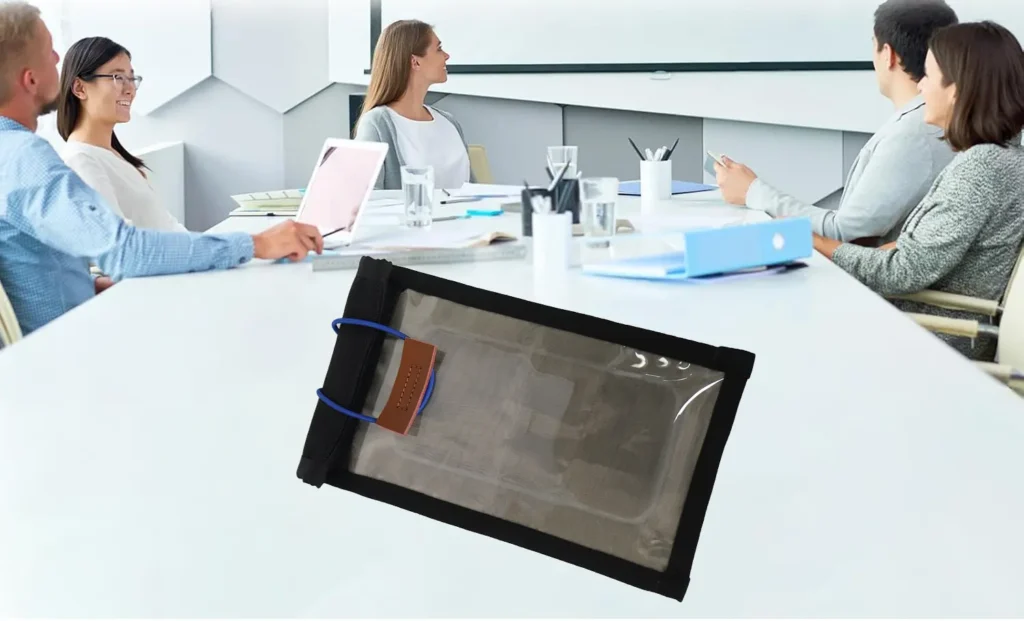
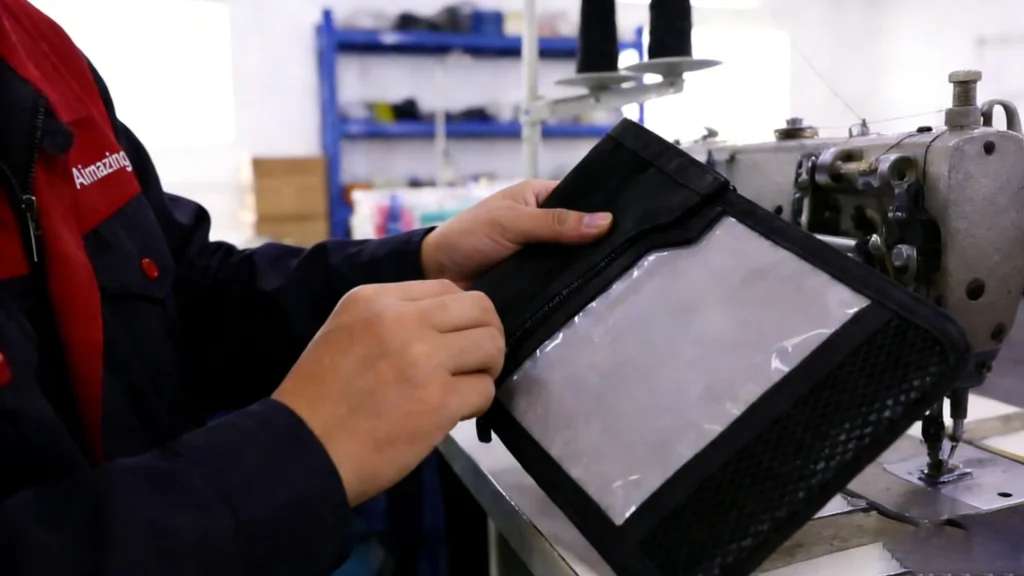
Technological Integration: Traditional shielding bags act as “black boxes,” preventing device identification while enclosed; this series utilizes specialized, high-transparency conductive PVC windows to bridge this gap.
Secure Identity Verification: Administrative personnel can scan asset tags or verify serial numbers through the conductive window without removing the device, maintaining a continuous “Air-gap” and preventing unauthorized signal synchronization during sensitive proceedings.
Operational Monitoring: Forensic analysts can monitor screen alerts or vibration patterns in real-time while ensuring the device remains absolutely isolated from external WiFi or cellular base stations.
4.3 Passport and Multi-Functional Organizers: Electronic Escort for Transnational Transit
Targeting: Multinational executives, diplomatic personnel, and corporate travel management.
Environmental Complexity: International travel exposes biometric E-Passports to sophisticated unauthorized scanning, necessitating rigorous physical isolation. Faraday bags for passports and RFID blocking pouches ensure that sensitive travel documents remain protected from potential threats.
Zonal Defense Architecture: A bifurcated design utilizes a core 106dB chamber for high-sensitivity devices and passports, while secondary compartments house non-sensitive items like boarding passes. This logic ensures that critical digital assets remain in a state of “physical offline” during the logistical chaos of airport security and transit.
4.4 Tablet and Laptop Enclosures: Physical Buffers for Mobile Enterprise Security
Targeting: IT departments, sensitive personnel, and R&D divisions.
Extending Internal Security: Organizations prioritize neutralizing the risk of devices automatically connecting to rogue WiFi or malicious base stations during a commute. Laptop Faraday bags and tablet enclosures are engineered to mitigate these risks effectively.
Reinforced Faraday Architecture: Designed for 13-16 inch hardware, these sleeves feature widened conductive overlap at the margins to prevent unauthorized data interception via electromagnetic leakage (TEMPEST).
Bimodal Protection: The impact-resistant properties of 1680D Oxford fabric provide dual-layer insurance, protecting corporate assets from both physical kinetic damage and electronic intrusion.
4.5 Integrated Shielding Back-Systems: The Mobile “Secure Room”
Targeting: Specialized operations, confidential transport, and high-level executive protection.
System-Level Engineering: This represents the pinnacle of integration, where large-scale shielding chambers are embedded directly into the backpack chassis through advanced industrial sewing, perfect for EMF Protection Backpacks and Expandable Faraday Backpacks.
Covert Defense: While appearing as standard professional luggage, the interior functions as a formidable Faraday cage, reducing the profile of the carrier and mitigating the risk of physical hijacking in public spaces.
Thermal Management: Specialized high-end iterations incorporate directional ventilation designed to dissipate heat from active hardware without compromising electromagnetic seal integrity
To provide a clearer perspective on our diverse range of sizes and application scenarios, we have prepared a comprehensive showcase. Click below to watch the video and discover how each enclosure is tailored for different organizational assets.
5. Market Leaders: A Technical Analysis of the Top Three High-Demand Institutional Configurations
Analysis of global procurement data from governmental and corporate entities indicates that the most successful solutions are characterized by exceptional high-frequency durability and scenario-specific functional design.
TOP 1: Universal Forensic-Grade Mobile Shielding Enclosure (Visual Window Series)
Strategic Positioning: Engineered for law enforcement agencies, classified conferencing facilities, and IT security auditing.
Core Drivers of Adoption: Resolution of the “Trust Black Box”: Conventional opaque enclosures prevent users from verifying device status, often leading to uncertainty regarding signal isolation. The integration of a customized conductive PVC window enables security personnel to confirm asset identification via QR scanning or observe signal indicators without breaching the electromagnetic seal, achieving visualized shielding integrity.
Preservation of the Judicial Chain of Custody: This configuration typically features a dedicated evidence card slot, allowing for immediate identification tagging upon seizure. Combined with a 106dB attenuation rating, it ensures that devices remain absolutely isolated from remote wipe commands during the critical transit phase from the field to the laboratory.
1680D Structural Fortification: Mobile devices, characterized by metallic edges, exert significant mechanical stress on internal liners. The rigid support provided by 1680D Oxford fabric ensures that the internal shielding matrix remains uncompromised by punctures, even under the rigorous conditions of emergency enforcement or repetitive industrial use.
TOP 2: Premium Automotive Signal Isolation Key Case (Single-Handed Access)
Strategic Positioning: Designed for high-end automotive dealerships, vehicle leasing conglomerates, and insurance underwriting agencies.
Core Drivers of Adoption: Mitigation of Relay Attack Vulnerabilities: The global rise in sophisticated signal-hijacking thefts targeting luxury vehicles has prompted insurers to mandate the use of shielding enclosures as a condition for premium reduction. The 106dB gain provided by this model effectively neutralizes high-powered signal amplifiers utilized by unauthorized third parties.
Ergonomic Hardware Engineering: Recognizing that operational friction leads to user abandonment, this configuration utilizes a refined lever-action or magnetic guidance system. This enables seamless single-handed access, ensuring that end-users can easily secure their keys while burdened with other items.
Institutional Branding Quality: The dense texture of 1680D Oxford fabric, paired with precision logo debossing, offers a visual and tactile profile far superior to synthetic alternatives. This enhances the perceived value of the dealership’s brand while aligning with the aesthetic expectations of high-net-worth vehicle owners.
TOP 3: Mobile Information Security Laptop Sleeve (14-16 Inch Universal)
Strategic Positioning: Optimized for multinational executives, defense research personnel, and mobile financial workstations.
Core Drivers of Adoption: Prevention of Passive Network Intrusion: Hardware remains highly vulnerable to unauthorized access when exposed to public WiFi or rogue base stations in transit. This enclosure provides deep attenuation across cellular, WiFi 6E, and Bluetooth 5.3 bands, functioning as a portable “Offline Vault” for sensitive intellectual property.
Dual-Layer Redundancy Logic: While laptops are accessed less frequently than mobile devices, the individual value of the protected asset is significantly higher. The dual-layer shielding architecture provides a critical safety margin; even if the exterior layer is compressed during prolonged transport, the interior layer maintains high-gain isolation.
Omni-Dimensional Carry Compatibility: Precision-engineered dimensions allow these sleeves to function as independent hardware cases or as integrated components within standard professional backpack systems. The inherent shock-absorption properties of the 1680D substrate provide a comprehensive defensive perimeter against both electromagnetic and physical kinetic threats.
Summary of Institutional Procurement Logic
Analysis of these high-demand configurations reveals a definitive procurement logic centered on technical performance, operational longevity, and scenario-specific engineering.
Performance as the Baseline: Attenuation levels must meet or exceed the 100dB threshold (specifically 106dB) to remain effective against the escalating complexities of the 5G and satellite telecommunications landscape.
Durability as a Core Asset: The integration of 1680D Oxford fabric transitions the product from a disposable commodity into a durable institutional asset with a significantly extended service life.
Design Details as Conversion Drivers: Specific functional features, such as conductive visual windows, ergonomic single-handed hardware, and integrated evidence tracking slots, represent the critical design nuances that secure institutional decision-maker approval.
6. Global Brand Intelligence: Comparative Profiles and Strategic Advantages
The global landscape for electromagnetic shielding is defined by a select group of manufacturers, each specializing in distinct operational requirements. For institutional stakeholders, understanding these brand identities is critical to aligning procurement with specific security objectives.
6.1. Mission Darkness (USA)
As a premier benchmark in the global forensic and counter-terrorism sectors, Mission Darkness—operated by MOS Equipment—is distinguished by its comprehensive Shielding Ecosystem. Their product portfolio extends from micro-terminal enclosures to large-scale mobile shielding tents capable of housing entire vehicles.
Strategic Advantage: Institutional preference is driven by high-level professional validation, with products typically accompanied by rigorous laboratory certification.
Forensic Optimization: Specialized features, such as transparent evidence tracking slots, are engineered specifically for law enforcement workflows.
Hardware Innovation: Patented magnetic closure systems eliminate the mechanical fatigue and acoustic signatures associated with traditional hook-and-loop fasteners, significantly enhancing utility during covert operations.
6.2. Disklabs (UK)
With over two decades of expertise in digital forensics, Disklabs maintains a dominant position among European law enforcement agencies through Extreme Compliance and functional innovation.
Strategic Advantage: Recognized as one of the few suppliers with official UK Police accreditation, Disklabs represents the standard for regulatory adherence.
Dynamic Shielding Capabilities: Beyond static isolation, they have pioneered forensic analysis bags equipped with shielded physical interfaces (e.g., USB 3.0). This allows technicians to perform wired data extraction in a fully isolated electromagnetic environment, establishing a formidable technical barrier for high-end judicial and laboratory applications.
6.3. SLNT / Silent Pocket (USA)
SLNT leads the executive procurement and corporate gift markets by successfully synthesizing Secret Security with a Business Aesthetic.
Strategic Advantage: Departing from a purely tactical appearance, SLNT utilizes premium leathers and minimalist tailoring to align with high-end corporate accessories.
Advanced Material Engineering: Their patented Multishield® lining technology provides high-gain attenuation within an ultra-thin profile. For institutional partners operating in high-level political or commercial environments, this discreet protective layer provides the necessary security without compromising professional presentation.
6.4. GoDark® Bags (Canada)
GoDark is defined by its “survivalist” engineering, prioritizing resilience in the most hostile operational environments.
Strategic Advantage: Adherence to the rigorous MIL-STD-188-125-2 military testing standard ensures that critical electronics are protected even against Electromagnetic Pulse (EMP) events.
Environmental Resilience: Their signature roll-top sealing mechanism provides both definitive signal isolation and IPX8-rated waterproofing. GoDark is the definitive choice for emergency response departments and industrial stakeholders operating in maritime or mining sectors.
6.5. Aimazing (China)
Aimazing occupies the global apex of Technical Leadership and Industrial Durability, offering a sophisticated balance between high-gain attenuation and lifecycle efficiency.
Strategic Advantage: Leveraging an industry-leading 106dB shielding gain, Aimazing provides a defensive perimeter capable of neutralizing 5G millimeter-wave and emerging 6G signal threats.
Structural Superiority: Unlike Western competitors, Aimazing utilizes a dual-layer 1680D Oxford fabric architecture, offering superior abrasion and tear resistance that significantly reduces total lifecycle maintenance costs for institutional deployments.
Commercial Scalability: The brand’s core strength lies in its ability to translate military-grade technology into versatile commercial applications, providing flexible customization—such as precision branding and bespoke dimensions—to meet the large-scale deployment needs of modern enterprises.
7. Institutional Compliance and Global Certification Standards
For multinational organizations, regulatory compliance is the prerequisite for procurement. Beyond achieving a technical benchmark of 106dB, these solutions are engineered with a forward-looking focus on international certification frameworks.
Dual Alignment with Military and Civil Standards The architectural design adheres to both MIL-STD-188-125-2 (High-Altitude Electromagnetic Pulse protection) and IEEE 299-2006 (Standard Method for Measuring the Effectiveness of Electromagnetic Shielding Enclosures). This dual-standard approach ensures that the hardware withstands the most rigorous third-party laboratory evaluations globally.
Environmental Integrity and Chemical Safety (RoHS/REACH) Addressing institutional concerns regarding occupational health, the 1680D Oxford fabric and internal shielding textiles are fully compliant with EU environmental directives. These materials are free from heavy metals and hazardous volatile organic compounds (VOCs), making them suitable for long-term storage and use within confined professional office environments.
In our capacity as a specialized manufacturing facility, we recognize that for institutional leadership, the selection of electromagnetic isolation solutions is a strategic exercise in risk governance. It is not a matter of simple hardware acquisition, but a definitive effort to neutralize uncertainty within a zero-trust physical defense perimeter.The following analysis addresses the primary technical concerns voiced by enterprise and governmental procurement officers.
Q1: What necessitates a 106dB dual-layer configuration over standard 80dB single-layer alternatives?
A1: While 80dB may suffice for low-interference environments, it often fails in urban centers with dense 5G base station coverage where signal field strength is exceptionally high.
The 106dB gain provides a critical safety margin, ensuring “absolute zero signal” states even under extreme interference.
In the context of enterprise data sovereignty, the cost of a single data breach exponentially outweighs the marginal premium of a high-gain enclosure.
106dB currently represents the definitive ceiling for commercial-grade security redundancy.
Q2: How is the shielding efficacy of these products verified?
A2: All RFID-attenuating textiles have successfully undergone professional NFC and specialized telecommunications certification.
Each manufacturing batch is subjected to empirical validation utilizing high-precision spectrum analyzers to ensure consistent performance.
See the definitive proof of our signal isolation—click below to watch the actual laboratory testing and witness the shielding performance firsthand
Q3: Does the integration of a customized PVC window compromise shielding integrity?
A3: No; the engineering architecture ensures the PVC viewing port is situated externally to the primary shielding layer or utilizes a specific overlapping closure structure.
This design ensures that the functional window does not violate the continuity of the Faraday cage.
Q4: Why prioritize 1680D Oxford fabric over traditional leather or PU substrates?
A4: Institutional procurement prioritizes operational reliability over transient aesthetics.
Unlike PU materials prone to peeling and degradation, 1680D Oxford fabric offers an anti-aging profile that extends the product lifecycle by 300% to 500%.
This longevity provides a superior Return on Investment (ROI) for government and corporate fixed-asset procurement.
Furthermore, 1680D fabric demonstrates superior resilience in extreme temperature fluctuations and high-humidity environments compared to leather, while aligning with a modern industrial design aesthetic.
Q5: Are these enclosures effective against RFID-based financial skimming?
A5: RFID shielding is the baseline functionality of our architecture.
While standard RFID protection (13.56MHz) requires only 30dB of attenuation, our products provide military-grade full-spectrum isolation that far exceeds this requirement.
9. Future Trajectories: The Evolution of Electromagnetic Governance
As the digital landscape advances toward 2026 and beyond, the electromagnetic environment is undergoing a fundamental transformation. Institutional stakeholders must shift their defensive logic from reactive measures to proactive strategies capable of anticipating the challenges of the next decade.
9.1 The High-Frequency Era: From 5G Millimeter-Wave to 6G Protocols
The comprehensive commercialization of 5G millimeter-wave (mmWave) and laboratory advancements in 6G technology are driving communication frequencies toward the 100GHz and terahertz (THz) bands.
Physical Impediments: Shorter wavelengths present highly complex penetration and diffraction characteristics. While traditional enclosures easily manage low-frequency signals (2G/3G), at extreme frequencies, microscopic gaps in fabric molecules or needle perforations in stitching can function as waveguides.
Research Focus: Through nano-scale metallic vapor deposition, we are increasing shielding fiber density by 40%. This ensures a broader, more consistent frequency response curve to achieve generational compatibility with future ultra-high-frequency communications.
9.2 Intelligent Systems: Transitioning from Passive Enclosures to Active Perception
Future signal-shielding solutions will evolve beyond silent containers to incorporate self-diagnostic capabilities, addressing institutional concerns regarding human error.
Closed-Loop Feedback: Development is underway for flexible intelligent induction tags. Utilizing conductive fiber contact points at the enclosure opening, the system can monitor in real-time whether the Faraday cage is definitively sealed.
Intelligent Alert Protocols: Specialized institutional versions will utilize Bluetooth Low Energy (BLE) connectivity within the exterior safety zone. If the enclosure is not folded securely, causing attenuation to drop below safety thresholds, the user’s wearable device will receive an immediate alert. This “Smart Security” framework significantly mitigates administrative risks associated with improper use.
9.3 Mechanical Longevity: The 100,000-Fold Durability Standard
Molecular-Level Fatigue Resistance: By modifying 1680D Oxford fabric with high-performance polymers and integrating flexible metallic fiber threads, we have achieved a breakthrough in durability. Experimental data indicates that after 100,000 simulated mechanical fold cycles, the fracture rate of the metallic shielding layer remains negligible, with signal attenuation deviation strictly controlled within 5%.
Full Lifecycle Assurance: This resilience ensures that even under high-frequency operational scenarios—averaging 50 openings per day—the product remains stable for over five years. This transitions the technology from a “disposable commodity” to a definitive “digital asset protector”.
10. Conclusion
In an era defined by ubiquitous connectivity and total traceability, digital security has evolved beyond a mere contest of software algorithms. When traditional firewalls prove inadequate against physical-layer signal hijacking, “Physical Disconnection” emerges as the most definitive and unadulterated form of security.
As specialists in electromagnetic isolation, we recognize the profound significance behind every institutional procurement order: it represents the protection of multi-billion-dollar commercial contracts, the preservation of mission-critical judicial evidence, or the fundamental right to privacy for high-net-worth individuals.
We are dedicated to providing a comprehensive value chain, from advanced material synthesis to scenario-specific hardware customization. Leveraging the 106dB technical apex, the structural resilience of 1680D Oxford fabric, and an ongoing anticipation of future signal threats, we do more than manufacture enclosures—we are constructing the physical barriers of digital civilization.
To select a 106dB standard is to secure a promise of “unreachability” and a commitment to maintaining absolute digital silence amidst global electromagnetic noise, offering the highest level of protection with solutions like Faraday bags and EMP protection bags.
Contact Aimazing today to request a custom quote and sample development plan.
Let’s design your next Faraday bag collection to offer unmatched protection — even in the most challenging environments.
Here, developing your OEM/ODM private label bag collection is no longer a challenge—it’s an excellent opportunity to bring your creative vision to life.
Here, developing your OEM/ODM private label bag collection is no longer a challenge—it’s an excellent opportunity to bring your creative vision to life.
Feel free to contact us for any technical or business-related information
About Us
Guangzhou Aimazing is a functional technology bag manufacturing factory ranked among the top 10 in China. Since 2000, we have been committed to providing customers with the world’s best manufacturing solutions, and we always strive for excellence. Through innovative products and high-quality services, we aim to meet your various demands for leading innovative brands. We look forward to working together with you to create world-class bag products& brands.
Thank you for reaching out to us at Aimazing, we have much experience in industry over 26 years,please advise if you have any requested, we are warmly want to help you no matter in sample or bulk. Look forward to any ideals about your project.
WhatsApp Us
WhatsApp us
Ask For A Quick Quote
We will contact you within 1 Hour, please pay attention to the email with the suffix“@aimazingbag.com”.
For all inquiries, please feel free to reach out at: