1. Introduction: The Evolution of Laptop Bags in 2026
The 2026 laptop bag market signifies a fundamental shift from simple protective sleeves to critical mobile infrastructure. Retailers must navigate a landscape where carry solutions function as sophisticated command centers rather than peripheral accessories.
1.1 Market Evolution Drivers
- Hardware-First Architecture: The increasing complexity of portable workstations—featuring 16-inch displays, secondary screens, and massive thermal output—necessitates internal architectures that offer more than just basic padding.
- The “Anywhere-Office” Standard: Hybrid workflows span coffee shops, transit hubs, and formal boardrooms, requiring bags with “context-shifting” capabilities that move seamlessly between environments.
- Asset Insurance Mindset: Retailers must pivot the consumer conversation from “style-first” to “industrial-grade asset protection,” positioning the bag as a low-cost insurance policy for $2,000+ hardware.
1.2 The Wholesale Imperative
- Technical Carry focus: Shifting inventory strategy toward structural engineering and ergonomic load-path management.
- Resilience Testing: Wholesale buyers must demand stress-test data for zippers, seams, and handles to minimize the high return rates associated with commodity-grade materials.
- Value-Added Retailing: Moving beyond commoditized pricing by framing products as “professional-grade equipment” essential for career performance.
2. Do I Really Need a Laptop Bag? Understanding the Demand
The laptop bag functions as mandatory insurance against hardware failure for the professional production class.
2.1 The Psychology of Asset Security
- Kinetic Risk Mitigation: Modern consumers understand that internal suspension systems and high-density foam significantly lower the probability of screen fractures during transit.
- Workflow Cognitive Load: Advanced accessory grids mitigate “cable chaos,” streamlining the mobile office setup process by providing a dedicated “home” for every peripheral.
- Professional Identity: In elite corporate environments, the carry solution acts as a proxy for the user’s professional discipline and organizational skills.
2.2 Technical Requirements for High-Value Retention
- Impact Diffusion: Utilizing high-density EVA foam to absorb and redistribute kinetic energy from drops.
- Circuit Protection: Implementing antistatic micro-suede linings to prevent electrostatic discharge (ESD) damage to sensitive motherboard components.
- Environmental Sealing: Thermal-bonded edges to prevent the ingress of moisture and dust into sensitive port interfaces.
3. Is a Laptop Backpack Worth It? Key Factors for Wholesale Buyers
The laptop backpack has solidified its position as the definitive industry standard for the modern mobile professional.
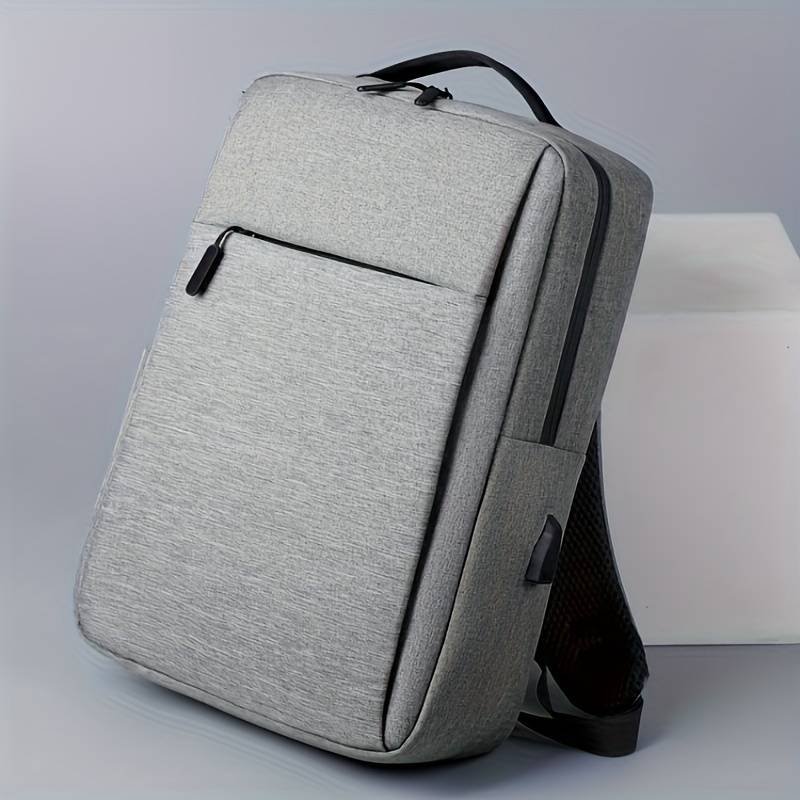
3.1 Advanced Ergonomics
- Load-Path Engineering: Utilizing dual-strap weight distribution to prevent chronic spinal strain during long-distance commutes.
- Air-Channel Ventilation: Breathable mesh back panels that prevent heat and moisture accumulation during intense urban travel.
3.2 Functional Value Propositions
- Hands-Free Transit: Design features optimize mobility for cyclists, commuters, and travelers navigating congested terminals.
- Power-User Modules: Integrated high-speed USB-C pass-through ports accommodate high-drain mobile hardware.
- Consolidation Economics: Multi-compartment structures for tech, fitness, and office gear drive higher Average Order Values through product bundling.
4. What Are the Best Laptop Bag Brands to Stock?
In the 2026 market, brand selection transcends logos; it is a commitment to engineering capability. Wholesale buyers must curate a brand matrix that balances technical resilience with market-leading innovation.
- Industrial Engineering Specialists: Prioritize brands utilizing aerospace-grade shock-absorption frames and impact-resistant polymer shells. These products undergo rigorous drop-testing and cycle-testing, directly reducing your return rates and reverse-logistics overhead.
- Disruptive Innovation Brands: Focus on labels that hold patents for modular internal organization. These brands allow customers to customize their internal grid (for drones, cameras, or peripherals), turning a generic bag into a personalized professional workstation.
- ESG-Compliant Leaders: As global regulatory scrutiny increases, sourcing products made from closed-loop recycled nylon and PFAS-free waterproofing is a mandatory entry requirement for premium retail channels in North America and the EU.
- OEM/ODM Solutions: Partnering with Aimazing for OEM/ODM solutions provides brand-exclusive designs featuring proprietary “Skeletal Stability” systems. These integrated support structures maintain a professional, structured silhouette regardless of internal load to eliminate the sagging, low-quality appearance common in entry-level market alternatives.
5. Laptop Bag vs. Backpack: Which Is Better for Your Customers?
In the 2026 marketplace, the debate between “briefcase” and “backpack” is no longer a matter of aesthetic preference; it is a question of Workflow Mapping. As a wholesale buyer, your inventory strategy must align with the specific transit and professional operational profiles of your target customer demographics.
5.1 The Workflow-Driven Segmentation Model
To maximize inventory turnover, utilize the following segmentation to guide your SKU-to-Segment allocation:
| Segment | Primary Transit Profile | Essential Hardware Load | Recommended SKU Focus |
| Corporate Executive | Chauffeur/Taxi/Air Travel | 14″ Laptop + Tablet | Slim Messenger (Leather/Tech-Fiber) |
| Tech/Creative Nomad | Subway/Cycling/Co-working | 16″ Workstation + Full Peripherals | High-Capacity Modular Backpack |
| The “Bleisure” Pro | International Business Travel | Multi-device + 2-Day Apparel | Hybrid Convertible (3-Way Carry) |
5.2 The “Convertible Hybrid” – The 2026 Volume Driver
The “Convertible Hybrid” represents the most critical inventory opportunity for 2026. This product category addresses the “Context-Shifting” requirement of the modern professional.
- The Engineering Standard: A premium convertible must feature a “Zero-Friction” strap management system. Straps should be able to retract into a hidden, padded lumbar pocket in under 5 seconds, transforming the bag from a rugged backpack into a clean, handle-oriented briefcase.
- Why it sells: Customers are increasingly unwilling to purchase multiple bags for different contexts. Stocking hybrids reduces the “paradox of choice” for the consumer, simplifying your retail floor and increasing the probability of a conversion.
5.3 Anatomy of the “Professional Backpack” (Inventory Requirements)
For your high-volume backpack SKUs, the technical baseline must be rigorous:
- The “Vertical-Stacking” Interior: Unlike traditional bags that result in a “bottom-heavy” clutter, your inventory should prioritize vertical organizational dividers. This ensures the center of gravity remains close to the user’s spine, significantly reducing felt-weight during long commutes.
- Anchor-Point Reinforcement: Any backpack stocked for tech professionals must feature “Box-X” reinforced stitching at all anchor points (where shoulder straps meet the body). This is the #1 point of failure in commodity-grade bags; mandating this in your wholesale contracts will reduce your return-to-vendor (RTV) rate by up to 40%.
- The “Device-First” Security Zone: The laptop compartment must be suspended—meaning the floor of the laptop sleeve should not touch the base of the bag. This creates a “buffer zone” that prevents kinetic shock if the user drops the bag vertically.
5.4 Inventory Risk Management: The 50/30/20 Rule
To maintain a high-turnover inventory, we recommend the following strategic allocation of your purchasing budget:
- 50% – “The Commuter Benchmark”: High-capacity backpacks (24L-28L) that offer the widest appeal for tech-heavy professionals.
- 30% – “The Professional Hybrid”: Convertible bags that provide the visual transition from “Tech-Utility” to “Boardroom-Formal.”
- 20% – “The Heritage/Premium Messenger”: High-margin, low-volume SKUs designed for the C-Suite and professional services segment. These products anchor your brand’s perceived quality and justify a premium price point for the entire collection.
6. The Best Size Laptop for Students: How to Cater to This Market
The student demographic utilizes their gear with higher intensity than any other segment. Your inventory must prioritize “structural survivability.”
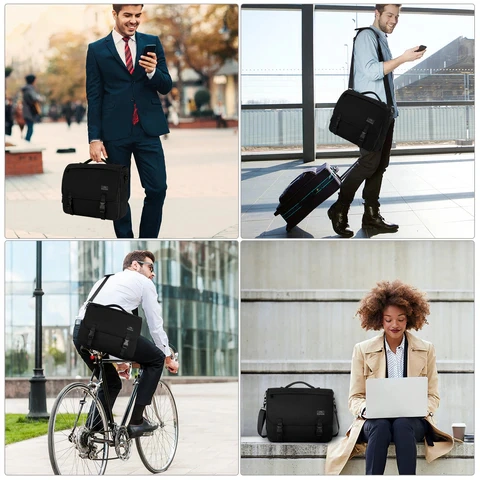
- Dynamic Sizing: Demand “Multi-Stage Adjustable Sleeves.” Velcro-based internal dividers should allow a single SKU to cradle devices from 13 to 16 inches securely, eliminating device shifting.
- Dual-Core Protection: Essential for the laptop-plus-tablet duo-carry habit. Independent padded compartments are a baseline expectation.
- Physical Trauma Resilience: Require materials passing the Martindale Abrasion test at 50,000+ cycles. Base panels must be reinforced with TPU-coated high-tenacity fabric to withstand being dragged across campus concrete.
7. The Perfect Size for a Backpack: A Wholesale Buyer’s Guide
In the 2026 professional landscape, “One-size-fits-all” is an obsolete procurement fallacy. Wholesale buyers must adopt a Volume-to-Utility (V2U) Matrix to ensure inventory matches the specific mobility profiles of the modern workforce. Stocking backpacks based solely on aesthetics leads to “dead stock”; stocking by precise liter capacity (L) ensures high inventory turnover.
7.1 The Volume-to-Utility (V2U) Inventory Matrix
Utilize the following classification to segment your warehouse allocation:
| Capacity | Market Profile | Primary Utility | Procurement Priority |
| 18L – 22L | Minimalist Commuter | Laptop + Tablet + Essentials | Low-Volume/High-Aesthetic |
| 24L – 28L | The “Commuter Benchmark” | Tech + Peripherals + Fitness Gear | High-Volume/Mass Market |
| 32L + | Nomad/Business Traveler | Tech + Multi-day Clothing | Niche/High-Margin |
7.2 The 18L-22L Minimalist: The “Precision-Carry” Segment
- Technical Focus: These bags must emphasize a “Sleek-Profile Architecture.” Because the target consumer (high-net-worth urban professionals) prioritizes visual minimalism, the inventory must be free of dangling straps or external mesh pockets.
- Engineering Standard: Procurement should focus on “Internal-Only Organization.” All storage—from power banks to cables—should be internal to maintain a seamless, aerodynamic silhouette. This segment commands premium pricing due to the complexity of achieving functional capacity within a limited footprint.
7.3 The 24L-28L Commuter Benchmark: The Volume Engine
- Market Rationale: This is the “Goldilocks Zone” of the 2026 backpack market. It fits the 16-inch workstation chassis without requiring the bulk of an adventure bag.
- Key Specifications for Buyers: External Access Points: Unlike the minimalist segment, this tier requires rapid-access external pockets (e.g., a fleece-lined top pocket for eyewear or a rapid-access magnetic side pocket for smartphone storage).
- Load-Lifter Integration: Ensure that your supplier includes load-lifter straps at the top of the shoulder assemblies. This feature is often omitted by low-end manufacturers but is non-negotiable for a 24L-28L pack to remain comfortable during a 45-minute subway or cycling commute.
7.4 The 32L+ Nomad Explorer: The “Bleisure” Advantage
- Context-Shifting Utility: This SKU caters to the rise of “Bleisure” (Business + Leisure) travel. The inventory focus here is “Zonal Organization.”
- Separation Logic: The bag must feature a clear partition between the “Tech-Zone” (the rear-facing, impact-suspended laptop sleeve) and the “Lifestyle-Zone” (a clamshell clothing compartment).
- Inventory Insight: Stocking this size allows your brand to capture the high-end traveler who typically buys tech bags and luggage separately. Positioning this as a “2-in-1 Travel System” significantly increases your average transaction value.
7.5 Structural Integrity Standards (The “Empty-Bag” Test)
Regardless of the liter size, a fundamental procurement rule for 2026 is the “Static-Upright Requirement.” The Buyer’s Test: When vetting samples, ensure that even when empty, the backpack does not “slump” or sag. A backpack that sags when placed on the floor signals low-quality base-board construction to the retail customer.
- The Solution: Mandate that your OEM utilizes rigid, lightweight HDPE base-plates (High-Density Polyethylene) in all SKUs over 20L. This adds negligible weight but creates an immediate perception of “Professional-Grade Utility,” allowing you to maintain higher retail price points across your entire catalog.
8. Laptop Bags for Women: Trending Styles and Functional Designs
In the 2026 market, the female professional demographic has rejected the binary choice between “utilitarian-tech gear” and “fashion-first handbags.” The growth in this segment is driven by a demand for Performance-Luxe—carry solutions that integrate heavy-duty hardware protection into silhouettes that maintain architectural integrity in boardroom settings.
8.1 The Ergonomic Re-Calibration
The most critical procurement error in the women’s segment is the “downsized-male-bag” approach. Your inventory must reflect specific ergonomic re-engineering:
- Shoulder Geometry (S-Curve Straps): Standard backpack straps are designed for broad-shouldered frames and often slide off narrower frames or cause discomfort in the axillary region (armpits). Mandate that your OEM utilizes “S-Curve” shoulder strap geometry with high-density, memory-foam padding to ensure weight is distributed across the collarbone rather than the shoulder point.
- Torso-Length Matching: Ensure your inventory includes “Women’s-Specific” torso lengths. A bag that is too long (extending below the lumbar) will bounce during transit, creating fatigue. Your inventory should focus on compact, vertical-load structures that sit higher on the spine.
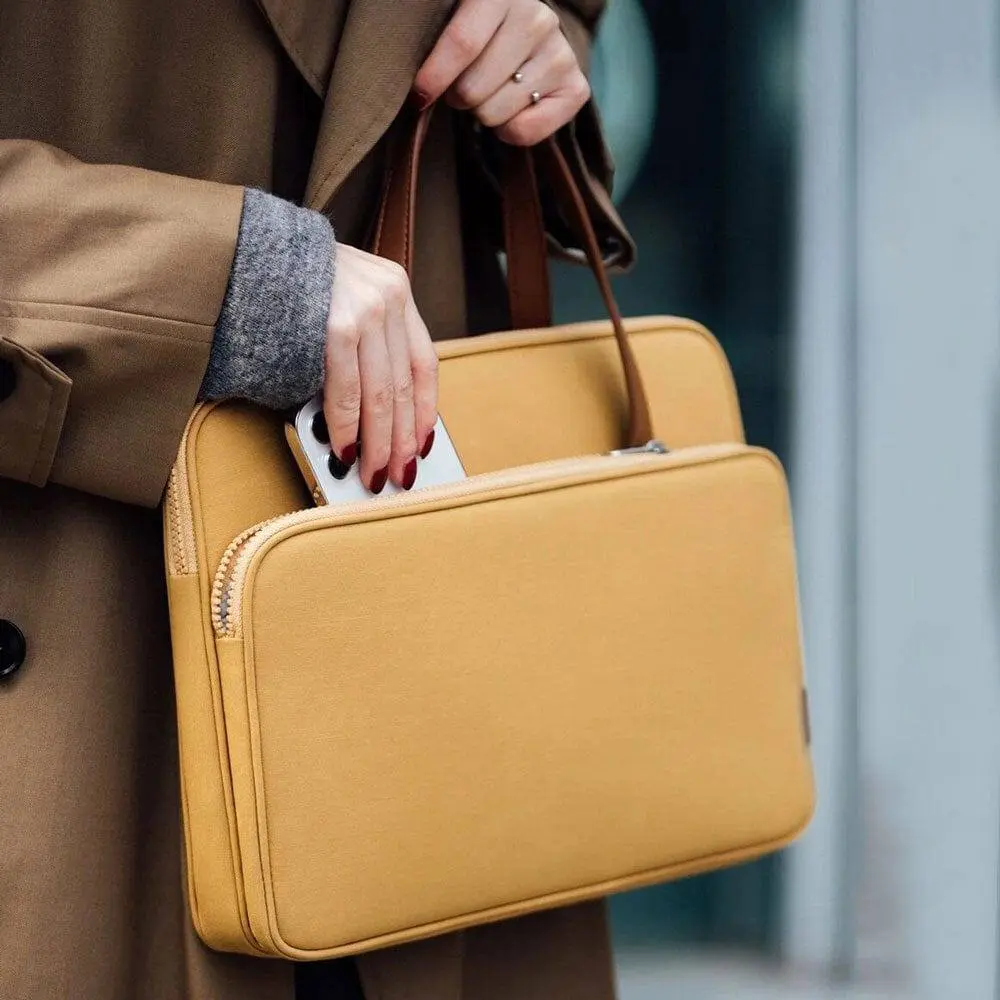
8.2 The “Office-to-Occasion” Modular System
The modern female professional requires a bag that transitions across three distinct environments: the commute, the boardroom, and the after-hours event.
- Invisible Hardware (The “Clean-Look” Standard): Procurement should favor SKUs with “Hidden-Hardware” aesthetics. This includes magnetized zipper covers, anodized matte-finish buckles (avoiding high-gloss or “bling” finishes), and concealed trolley sleeves.
- Dynamic Capacity (The “Hidden-Expansion” Gusset): Inventory should feature an internal expansion gusset. This allows the bag to maintain a slim, formal silhouette when empty, while expanding by 20% to accommodate an extra layer of clothing or a secondary tech device during business travel.
8.3 Critical Functionality: The “Device-Specific” Internal Grid
Do not stock bags that treat the interior as a “black hole.” Your purchasing criteria should mandate:
- Vertical-Stacking Organization: Unlike traditional designs that force items to pile up, insist on “Vertical-Shelf” interiors. Data cables, vanity kits, and power banks should each have a dedicated, vertically-aligned pocket. This prevents the “dig-and-retrieve” anxiety that causes surface damage to expensive device finishes.
- The 14-Inch Precision Slot: Given that the 14-inch MacBook Pro is the current market standard for professional women, your internal sleeves must be precision-engineered to this chassis size. An oversized, generic sleeve allows for hardware shifting, which leads to corner-case denting.
- The “Trolley-Sleeve” Essential: Any tote or backpack targeted at this segment must include a high-strength, integrated trolley sleeve. This is a non-negotiable feature for the business-traveler demographic.
8.4 Material Science: The “Performance-Vegan” Paradigm
2026 consumers are hyper-aware of environmental footprints and material durability.
- High-Tenacity Synthetic Leather (Performance-Vegan): Shift away from generic PU (polyurethane). Seek out Bio-based high-tenacity synthetics that offer a supple, “top-grain” hand-feel but provide superior scratch resistance and colorfastness.
- Antimicrobial Micro-Suede: The interior lining must utilize antimicrobial micro-suede. This serves two purposes: it provides a luxurious haptic experience when reaching into the bag, and it ensures the interior remains hygienic and odor-free even after a full day of commuting.
8.5 Inventory Profitability & Pricing Strategy
The women’s professional segment is highly price-insensitive if the utility-to-aesthetic ratio is optimized.
- The “Style-Premium” Margin: Because these bags are marketed as both “work equipment” and “personal style accessories,” you can capture an additional 15-25% margin compared to the high-volume Commuter Backpack SKUs.
- Visual Merchandising Note: When listing these SKUs, focus on the “Structural Resilience.” The product descriptions should highlight the “Self-Standing Chassis”—the fact that the bag stands up on its own without toppling over is a major value indicator for professional women who dislike placing their bags directly on the floor.
9. Why Waterproof Laptop Bags Are Essential for Your Inventory
In the current global climate, environmental volatility has moved from an anomaly to a constant. For the wholesale buyer, “waterproof” is not a marketing buzzword; it is a technical specification required to minimize the risk of asset destruction. In 2026, your inventory must be categorized by its IP (Ingress Protection) equivalency, even if the product is not formally certified.
9.1 Beyond DWR: The Multilayer Defense System
Many entry-level bags rely on simple DWR (Durable Water Repellent) sprays, which wear off after 6–12 months of use. Your procurement mandate must shift toward a permanent, structural defense system:
- TPU Lamination (The Core Shield): Specify Thermoplastic Polyurethane (TPU) lamination on the interior or exterior of the base fabric. Unlike surface sprays, TPU lamination creates a monolithic, non-porous layer that remains effective throughout the bag’s entire lifecycle.
- PU-Coated “Aquaguard” Zippers: The weakest point of any bag is the zipper interface. Your wholesale contract should mandate PU-coated, coil-reverse zippers. These create a mechanical gasket when closed, preventing water from wicking into the internal storage zones.
- Strategic Seam Geometry: Demand that your OEM engineers the “seam placement” away from high-exposure zones. For example, avoid placing seams on the very bottom of the bag where water pools when the bag is placed on a wet surface.
9.2 Aimazing Thermal-Bonding vs. Traditional Stitching
The primary cause of moisture ingress is the “Needle-Hole Effect.” Traditional sewing machines pierce the fabric thousands of times, creating microscopic channels that pull moisture into the internal compartments.
- Thermal-Bonded Precision: Your inventory should feature HF (High-Frequency) Welding or Thermal-Bonding. This process fuses two layers of fabric into one, eliminating the need for stitching in key areas like the laptop sleeve base and side pockets.
- The “Zero-Leak” Guarantee: By specifying thermal-bonding, you provide a clear B2B selling point. You can market these SKUs as “All-Weather Certified,” allowing retail partners to command a 15–20% higher price point over standard stitched bags, which are prone to leaks after moderate rain exposure.
9.3 The Interior Humidity Buffer (Climate Resilience)
A waterproof exterior is useless if condensation builds up inside during extreme temperature changes (e.g., moving from a sub-zero street to a heated office).
- Moisture-Wicking Internal Linings: Specify a “Micro-Ripstop” or “Antimicrobial Micro-Suede” that is hydrophobic. This prevents the lining from absorbing moisture if a small amount of liquid does bypass the exterior seal.
- Ventilation Channels (Pressure Equalization): For high-end SKUs, suggest the inclusion of a “Micro-Vent” system that allows the bag to equalize pressure without allowing liquid ingress. This prevents the “balloon effect” that can stress zippers when bags are packed and zipped in a hurry.
9.4 Why Wholesale Buyers Must “Over-Spec” Waterproofing
- Reducing Reverse Logistics (The Profitability Angle): Moisture-related damage is one of the most common reasons for customer returns. By “over-specifying” your waterproofing—even for urban commuters—you effectively lower your RTV (Return-to-Vendor) rate by preventing the “damp-inner-lining” claims that often precede formal hardware failure claims.
- Market Positioning: Positioning your inventory as “Climate-Resilient Gear” builds immediate trust with the “Prosumer” demographic. In 2026, a bag that survives a 30-minute deluge without compromise is perceived as a “hard tool” rather than a “soft accessory.”
9.5 Testing Requirements for Your OEM
To ensure your suppliers meet these standards, include the following in your technical specification sheets:
- Spray Test (AATCC 22): Demand a rating of 80 or higher after 20 wash cycles.
- Static Hydrostatic Pressure Test: Require that the primary fabric withstand at least 15,000mm of water pressure.
- Stress-Point Integrity: Ensure that the thermal bonds in the laptop sleeve area remain intact under a static weight load of 5kg for 24 hours.
10. TSA Laptop Bags: A Growing Trend for Frequent Travelers
For the wholesale buyer, a TSA-compliant laptop bag is a value-add that directly translates to time-efficiency for the end-user. By removing the need for the “laptop shuffle”—the process of removing hardware from the bag during screening—you are selling a premium experience. In 2026, this category must be redefined by “Non-Obstructive Scanning” (NOS) architecture.
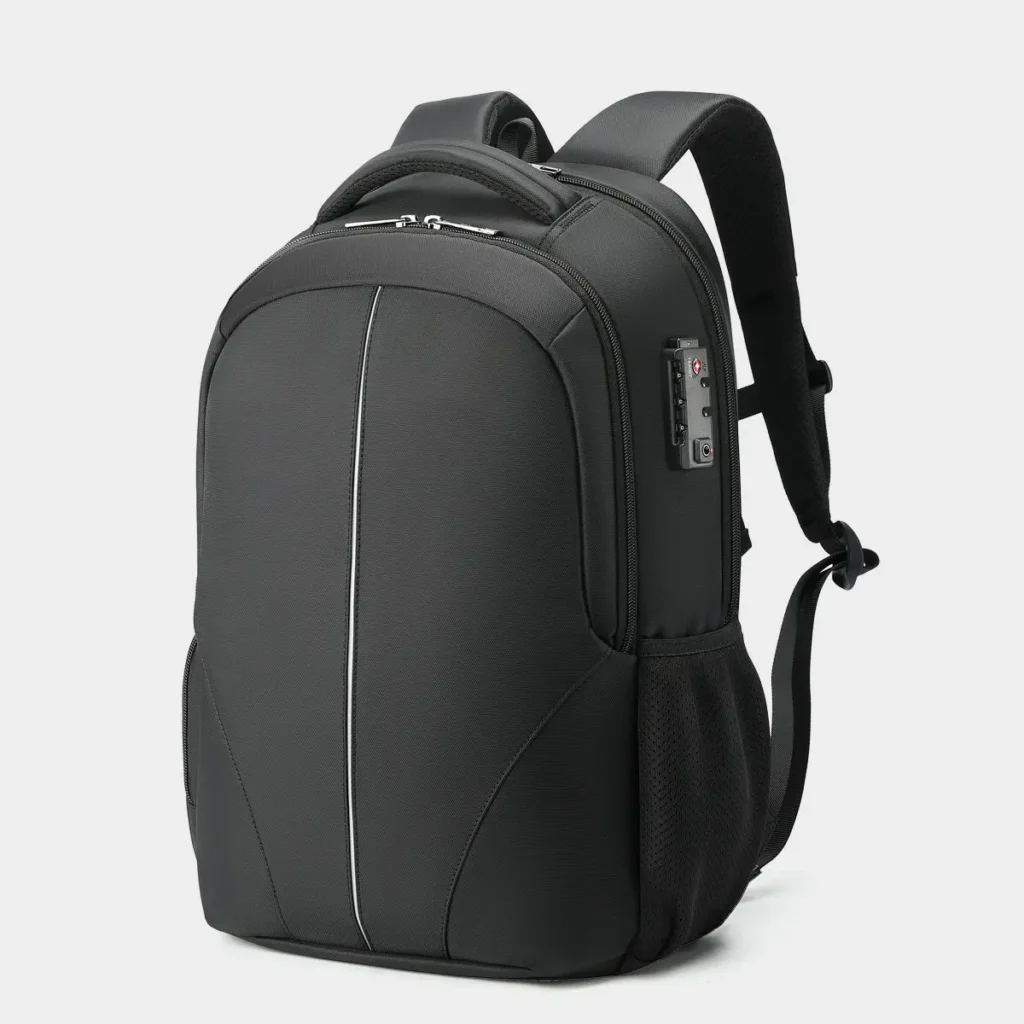
10.1 The “Butterfly/Clamshell” Opening Standard
The most critical engineering requirement for this category is the Full-Flat Opening (FFO) mechanism.
- Engineering Geometry: The laptop compartment must be strategically positioned on the rear-most panel (closest to the user’s back). The primary zipper must allow the compartment to open to a full 180 degrees, ensuring the laptop lays perfectly flush against the X-ray conveyor belt.
- Component-Free Scanning Zones: To ensure clear X-ray imagery, specify to your OEM that no metal hardware, rivets, or overlapping fabric layers should be placed directly over the laptop sleeve. Any “metallic noise” in the X-ray image can trigger a manual inspection, which defeats the purpose of your “TSA-Friendly” marketing.
10.2 Asset Security During Transit
The secondary benefit of TSA-compliant design is the reduction of theft risk.
- The “Closed-Loop” Advantage: By keeping the device inside the bag, the user eliminates the risk of leaving the laptop behind in a security bin or having it intercepted during the screening process.
- Hidden-Stash Integration: A truly “TSA-Friendly” bag in 2026 must feature a “Secured-Zone” for sensitive documents (passports, boarding passes) that remain accessible without exposing the main laptop compartment or the secondary gear storage.
10.3 The “Rapid-Access” Ergonomic Flow
A wholesale inventory of TSA-approved bags must address the “Transit-Stress” factor:
- Magnetic Quick-Release: High-end models should feature magnetic pull-tabs on the laptop sleeve. This allows the user to open the device compartment in under three seconds, providing a frictionless transition from “walking” to “screening.”
- Trolley-Sleeve Synergy: In 2026, a bag is not “TSA-Friendly” if it cannot secure to a rolling carry-on. Ensure every bag in this category includes a “Lock-Tight” Trolley Sleeve—a reinforced band of fabric that secures the bag to the handle of a suitcase, preventing the bag from sliding or tipping during the dash to the boarding gate.
10.4 Strategic Value Propositions for Your Catalog
- The “Efficiency-Tax” Margin: TSA-approved SKUs allow retailers to command a 10–15% price premium over standard backpacks. Positioning this as a “Time-Saving Investment” resonates deeply with the C-Suite and high-frequency business traveler segments.
- Future-Proofing for Global Standards: As airports globally shift to CAT (Credential Authentication Technology) and advanced CT scanners, your inventory needs to stay ahead. By requiring suppliers to design for “low-attenuation” (minimal interference) materials, you ensure that your inventory remains compliant even as international security standards evolve.
10.5 Quality Control: The “Scan-Ready” Verification
When vetting a new batch of TSA-compliant bags, utilize this simple internal test:
Placement: Load a 14″ laptop and a tablet into the sleeve.
- Angle Check: Ensure that when opened to 180 degrees, the laptop rests on the same plane as the bag’s base.
- Hardware Check: Verify that no metal zippers or buckles overlap the device position.
- Security Integration: Confirm that the laptop compartment is separate from the “Gear-Zone” so that if the bag is inspected, private personal items are not spilled onto the security conveyor belt.
11. The Role of Designer Laptop Bags in the Premium Market
The prestige segment focuses on designer laptop bags exhibiting architectural integrity.
- Executive Utility: Target professionals who prioritize structured, self-standing silhouettes that remain upright during meetings.
- Design Excellence: Focus on “Hero” SKUs featuring concealed hardware, proprietary antimicrobial micro-suede linings, and hidden strap mechanisms.
- Margin Optimization: High-end “prestige carry” products capture significant profit margins, as they are viewed as professional investments.
12. The Future of Laptop Bags: What Wholesale Buyers Should Be Prepared For
Future market shifts will prioritize integrated tracking and smart-material evolution.
- Integrated Tracking Ecosystems: Bags featuring global network-compatible tracking will move from optional to mandatory.
- Next-Gen Power: Kinetic charging and solar-integrated shell designs are shifting from experimental prototypes to mainstream luxury features.
- Supply Chain Partnerships: Establishing R&D-focused partnerships with entities like Aimazing secures competitive access to these future-proof innovations.
13. Conclusion: Building a Future-Proof Laptop Bag Inventory for 2026
Success in 2026 requires viewing the laptop bag as critical technical infrastructure.
- Inventory Diversification: Lead with high-performance backpacks while aggressively expanding into convertible and women’s tote segments.
- Hardware Validation: Demand waterproof zippers and TSA-compliant openings as non-negotiable technical baselines.
- Engineering Partnerships: Leverage Aimazing’s engineering capabilities to provide stock defined by skeletal stability and precision manufacturing.