1. The Strategic Shift: Why “Safety” is Your New USP
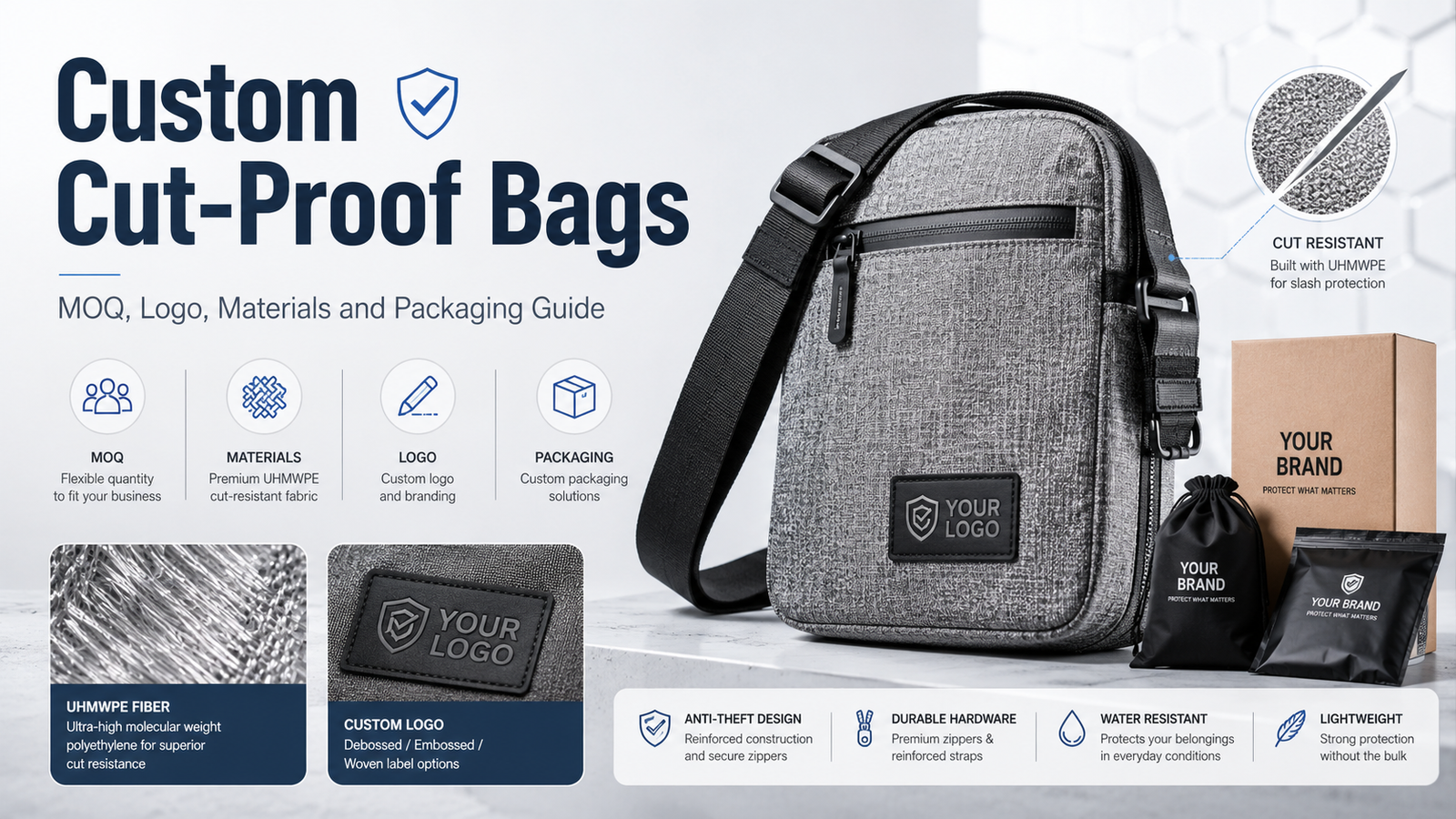
In 2026, the game has changed. The era of “pretty bags” is over. We’re dealing with a new reality: logistics and travel are under constant, evolving threats that cheap, stitched fabric simply cannot handle. If you’re still sourcing generic containers, you’re selling your customers short. At Aimazing, we don’t build “containers”—we build security hardware. We’ve turned the standard functional bag into an integrated defense system, engineered to stop everything from slash-and-grab theft to environmental breaches. Don’t sell a bag; sell absolute asset security.
By integrating a cut proof bag into your core product line, you are not merely adding a SKU; you are providing an insurance policy for the user’s daily assets. This transition from “carrying utility” to “asset protection” represents the most significant opportunity for brand premiumization this year. When your catalog includes safety bags engineered with verified resistance, your value proposition shifts from commodity pricing to security-driven loyalty. This shift is not about fear; it is about the professional standard of equipment that high-value demographics now demand.
2. The Science of Survival: Decoding UHMWPE Fabric
If your procurement team is still sourcing bags based on denier count alone, you are operating in the last decade. Professional-grade cut resistant bags are defined by the molecular integrity of their base textiles. The industry standard for high-performance security is UHMWPE fabric (Ultra-High Molecular Weight Polyethylene).
Forget the “tight weave” tricks you see on cheap bags—a sharp blade cuts right through those. We use UHMWPE, and it plays by a different set of rules. The fiber is so slick and dense that a blade simply cannot bite into it. When a utility knife hits the surface, it just slides right off. It can’t find a snag, it can’t sever the fibers, and it definitely can’t get inside. It isn’t just “resistant”—it’s physically impossible to slash.
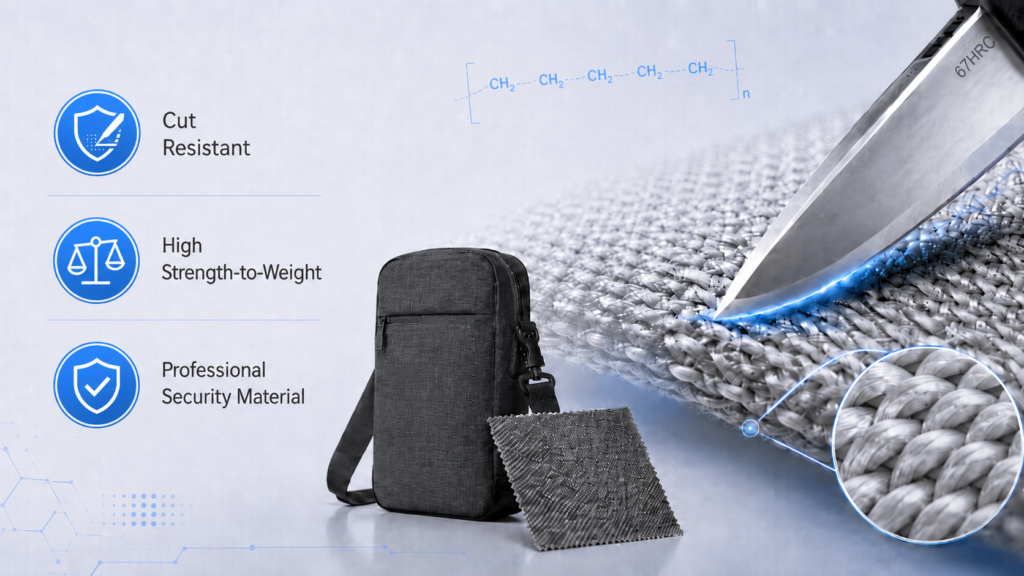
- Tensile Superiority: UHMWPE provides a strength-to-weight ratio that makes steel look obsolete.
- Structural Memory: Unlike cheaper synthetic blends, this material maintains its integrity even after prolonged exposure to environmental stressors like UV light and moisture.
- The Procurement Gold Standard: When sourcing, demand the ISO 13997 cut-resistance level. Anything less than a Level 4 or 5 rating is merely “heavy-duty fabric,” not a true slash resistant fabric.
Material Performance Comparison Table
| Material Type | Cut Resistance (ANSI) | Durability Index | Ideal Use Case |
| 1680D Oxford | Level 1 | Moderate | Standard Travel |
| Ballistic Nylon | Level 2 | High | Military/Tactical |
| UHMWPE Composite | Level 5 | Extreme | Security/Professional |
3. Engineering the “Tier 1” Safety Standard
A high-security bag is only as strong as its weakest seam. Many brands make the mistake of focusing on the fabric while ignoring the chassis. A true slash proof bag must be engineered as a cohesive unit. If the fabric is cut-resistant but the strap is made of standard webbing, the bag is effectively a target.
Our manufacturing philosophy at Aimazing Bag dictates that every structural point must be stress-tested:
- Reinforced Straps: A cut proof bag strap must utilize a hidden internal core—typically a galvanized steel wire or a secondary layer of ballistic-grade aramid—to ensure that a “slash-and-grab” maneuver results in total failure for the thief.
- Anti-Theft Locking Systems: We integrate safety lock bag mechanisms directly into the zipper track, preventing the “zipper-spread” method commonly used in high-density transit areas.
- Seam Engineering: Using double-bonded threads at high-stress junctions, we ensure that the bag does not compromise under the weight of the contents, which is often the point of failure for cheaper, mass-produced security products.
4. Customization as a Competitive Advantage
Customization isn’t just about putting your name on a bag—it’s about locking in the performance your brand stands for. When you work with us, you’re not just buying a bag; you’re setting the specs for a mission-critical tool.
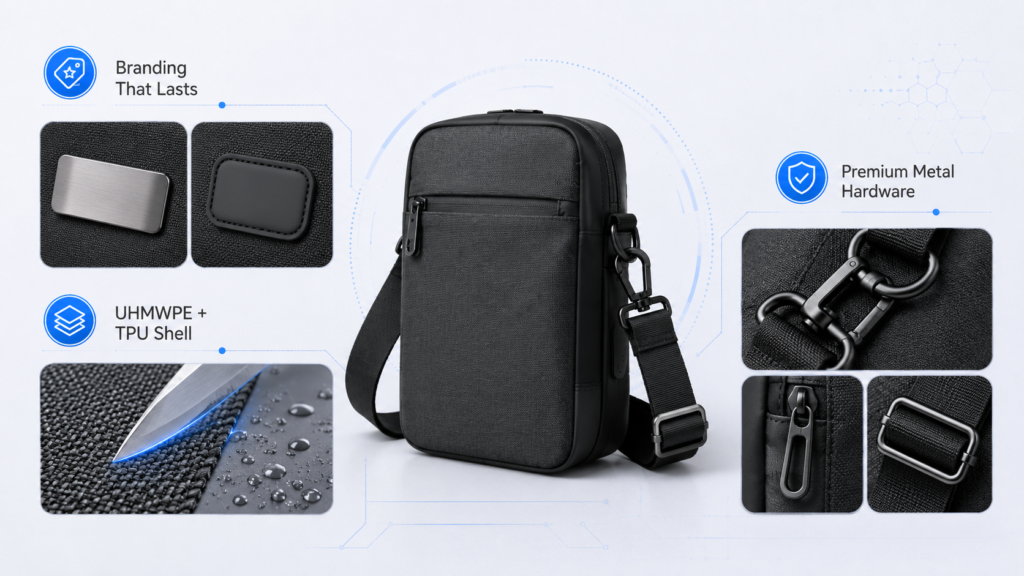
- Branding that Lasts: Forget cheap silkscreen prints that peel. For a premium security line, we only use laser-etched metal or RF-welded silicone patches. They look and feel expensive because they are, and they hold up under the same abuse as the bag itself.
- Material Engineering: Don’t choose between waterproof and slash-proof. We can fuse our UHMWPE cut-proof armor with a hermetic TPU shell. You get a vault that’s literally impossible to cut and completely submersible. That’s the level of security your flagship product deserves.
- Hardware Integrity: Plastic buckles are an amateur mistake—they’re the first thing to snap under pressure. For your line, we pull them for zinc-alloy or anodized aluminum. We’ve torture-tested these to exceed any load-bearing requirement your users will throw at them.
5. The Manufacturer Vetting Process: Transparency & QC
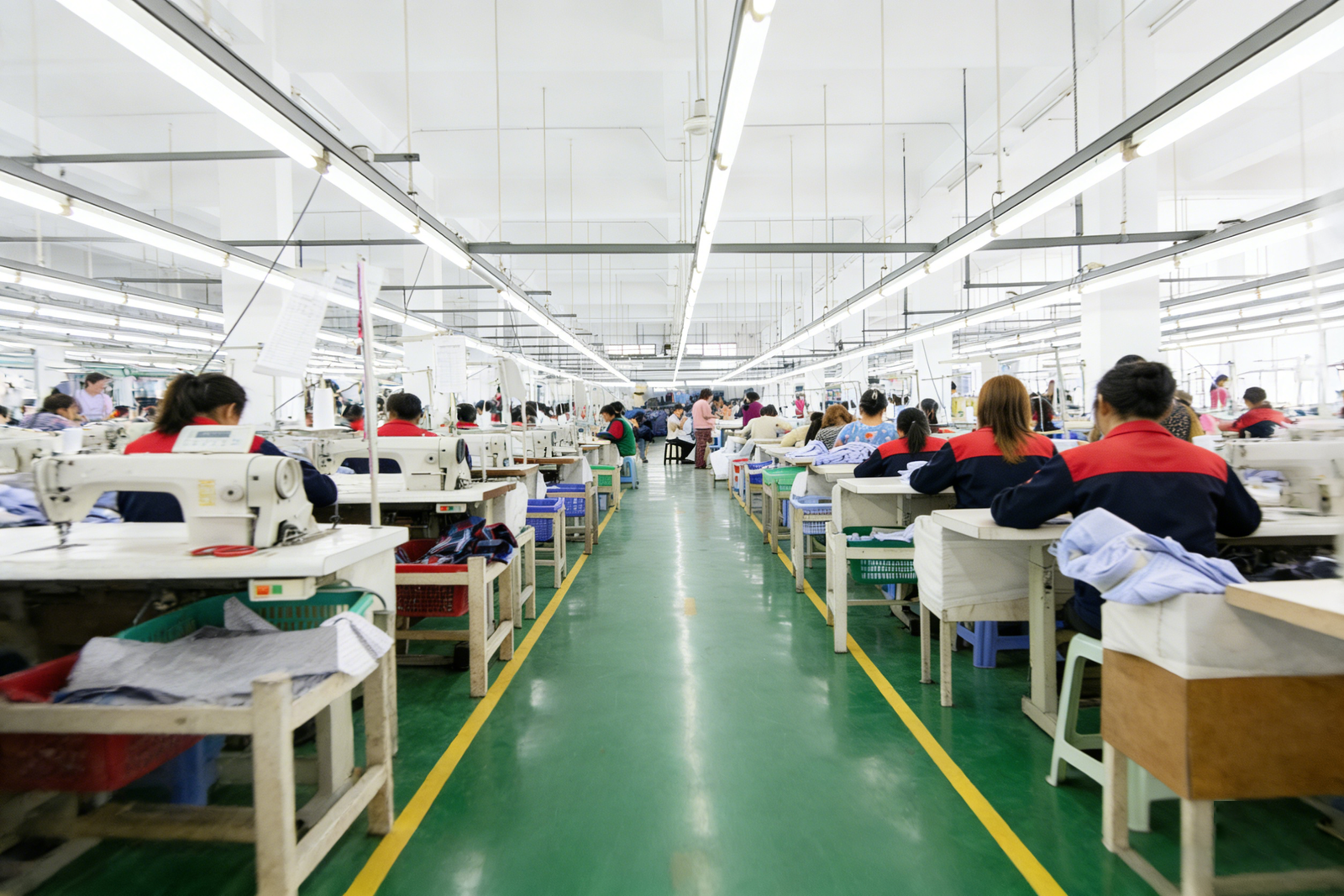
In the B2B world, the “middleman” is the greatest source of supply chain risk. To achieve the 2026 standard of quality control, you must partner with a facility that controls its own production environment.
- In-House R&D: A true manufacturer holds their own intellectual property. When you visit a facility, look for an on-site laboratory. Can they perform a puncture test on-site? Do they have a climate-controlled room for testing hardware fatigue?
- The IQC/IPQC/FQC Workflow: Quality shouldn’t be checked at the end; it must be checked at every station. We implement Input Quality Control (IQC) for raw materials, In-Process Quality Control (IPQC) for every sewing stage, and Final Quality Control (FQC) for the finished product.
- Traceability: Every bag should be traceable. From the batch number of the UHMWPE fabric to the origin of the zipper, transparency is the only way to guarantee the safety of your brand reputation.
6. Global Logistics and Scalability
For emerging brands, the biggest barrier is often the Minimum Order Quantity (MOQ). We have optimized our production line to support a 100-piece MOQ, allowing you to test the market with minimal capital risk.
- Logistics Flexibility: Whether you require DDP (Delivered Duty Paid) to an Amazon FBA warehouse or bulk sea freight to regional distribution centers in Australia and New Zealand, we handle the documentation to ensure compliant entry.
- Rapid Prototyping: We maintain a 2-5 day turnaround for prototypes. If you have an idea on Monday, we ensure the sample is in transit by Friday.
- After-Sales Support: We operate under a “Zero Risk” procurement model. Any manufacturing defect is met with immediate replacement, ensuring that your end-customers never see a faulty product.
7. Final Directive for Procurement Managers
The market for slash proof bags will continue to bifurcate. On one side, there will be the “disposable” security segment—cheap, ineffective bags with fake certifications. On the other, the professional-grade segment—verified, engineered, and reliable equipment.
By positioning your brand in the professional segment, you align yourself with a growing demand for security, longevity, and performance. As a manufacturer, our goal is to provide the technical backbone that allows your creative team to flourish. From the first mock-up to the final shipping pallet, the integrity of your supply chain is our primary product.