In the competitive landscape of 2026, “odor control” has evolved from a marketing buzzword into a rigorous engineering requirement. With 26 years of experience in high-performance textile manufacturing, I have observed that the most common failure in procurement stems from a fundamental misunderstanding of molecular physics. Effective stink-proof bags must do more than just block air; they must manage the kinetic energy of volatile organic compounds (VOCs).
1. The Physics of Odor: Why “Standard” Plastic Fails
1.1 Molecular Permeability: How Terpenes Escape Generic Packaging
Odor is not a static state but a constant flux of microscopic molecules seeking equilibrium. Generic plastic bags fail because most low-density polymers are surprisingly porous at a molecular level, allowing terpenes—the pungent oils responsible for heavy scents—to migrate through the material walls via a process called permeation. Standard poly-bags lack the density to repel these polar molecules, meaning that even a perfectly sealed “zip” bag will eventually leak a detectable scent profile within hours.
1.2 Defining the Stink Proof Bags Standard for 2026
To be classified as true stink proof bags in the current market, a product must demonstrate a near-zero gas transmission rate (GTR). We define the 2026 standard by a triple-layer defense mechanism: a primary physical barrier to stop bulk air movement, a secondary chemical lining to neutralize escaping molecules, and a tertiary airtight closure system. Professional-grade manufacturing focuses on reducing the free volume between polymer chains, creating a “molecular wall” that keeps the most aggressive odors trapped where they belong.
2. The Rise of High-Barrier Polymers: Smell Proof Mylar Bags
2.1 The Multi-Layer Structure: BoPET and Aluminum Foil Laminations
The industry has shifted heavily toward smell proof mylar bags due to their extraordinary barrier-to-weight ratio. These are not simple plastic sheets; they are sophisticated laminates comprising Biaxially-oriented Polyethylene Terephthalate (BoPET) often fused with microscopic layers of aluminum foil. This metallic core provides a literal light and gas shield, preventing the degradation of contents while ensuring that no VOCs penetrate the bag’s surface.
- Layering Logic: A typical 5-mil mylar structure includes an outer protective layer, an adhesive tie-layer, a metallic barrier, and an inner food-grade PE sealant.
- Seam Integrity: High-barrier polymers require precise heat-sealing temperatures to ensure the edges are as impermeable as the faces.
2.2 Commercial Efficiency: Why Smell Proof Mylar Bags Dominate Dispensary Retail
For dispensary owners and high-volume distributors, the smell proof mylar bags offer the most cost-effective solution for short-to-medium term storage. They are lightweight, reducing international freight costs, and offer a flat surface ideal for high-resolution branding. In the context of a modern dime bag or retail weed baggies smell proof, Mylar provides a professional “tamper-evident” finish that consumers trust, effectively balancing low unit cost with high technical performance.
3. The Science of Active Defense: Carbon Bags and Adsorption
3.1 Activated Carbon Linings: How “Breathable” Layers Trap Stink
Unlike passive plastic barriers, carbon bags utilize the principle of active adsorption to neutralize odors. These bags feature a lining made of activated carbon fiber (ACF) or charcoal-impregnated felt. The term “breathable” in this context is crucial; it means the fabric allows air to flow through it, but as scent molecules pass, they are captured by millions of microscopic pores within the carbon. This makes carbon bags ideal for soft-sided luggage where a vacuum seal is impossible.
3.2 The Van der Waals Force: Why High-Quality Carbon Bags Need Air Flow
The magic of high-end carbon bags lies in the Van der Waals force—a weak intermolecular attraction that pulls gas molecules into the carbon’s surface. For this force to be effective, the carbon lining must not be smothered by thick plastic coatings. A well-engineered bag ensures that air circulates within the carbon layer, maximizing the surface area available for adsorption.
| Technology | Mechanism | Best Use Case |
| Airtight Polymer | Physical Blocking | Single-use retail, long-term storage |
| Carbon Adsorption | Chemical Bonding | Travel bags, backpacks, daily use |
| Hybrid System | Dual Protection | High-end technical cases |
4. Portable Privacy: Sourcing the Perfect Smell Proof Pouch
4.1 Daily Commute Logistics: Why a Compact Smell Proof Pouch is a 2026 Essential
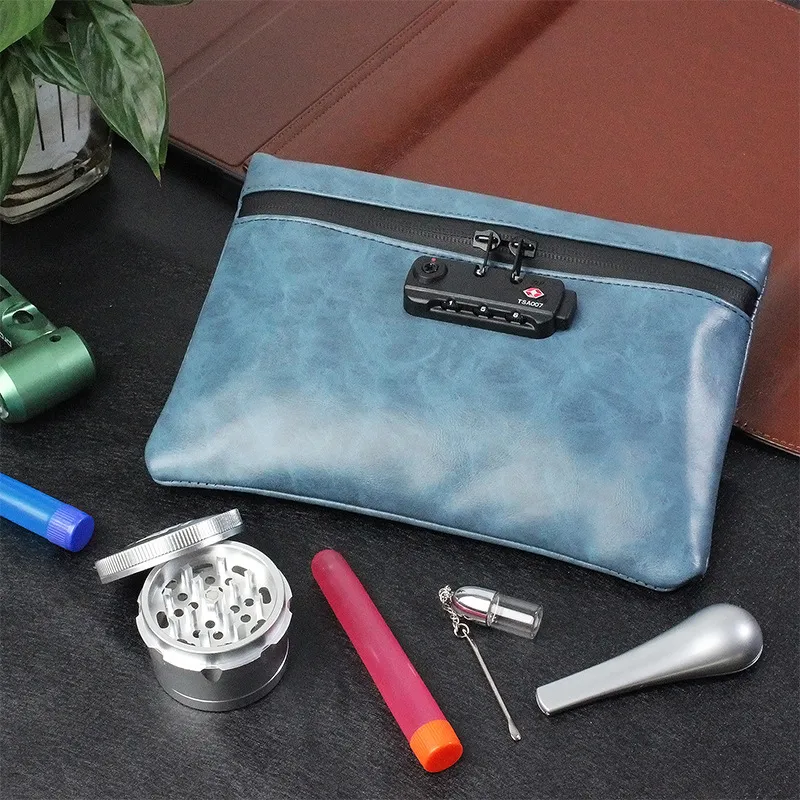
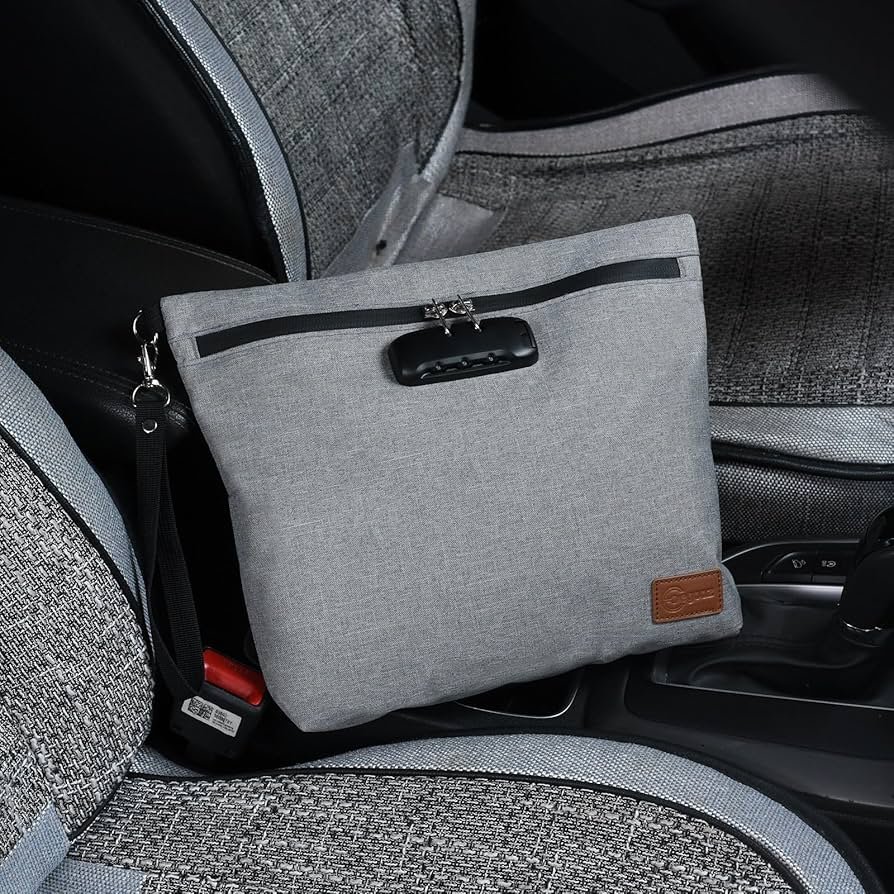
As lifestyle integration becomes a priority, the demand for a discreet smell proof pouch has surged. B2B buyers should look for compact designs that fit into standard luggage while maintaining a “zero-leak” profile. The 2026 consumer expects a smell proof pouch to be aesthetic enough for a coffee shop table but technical enough to pass through a crowded subway without a trace of scent.
4.2 Engineering the Zipper: The Weakest Link in Any Smell Proof Bags for Weed
No matter how good the fabric is, the zipper is where 90% of smell proof bags for weed fail. Traditional zippers are porous; air simply flows through the teeth. To combat this, we use waterproof, TIZIP-style, or heat-sealed zippers with a rubberized “garage” at the closure point. When sourcing odor proof bags for weed, always verify the zipper’s seal rating; it is the definitive red line between a functional product and a placebo.
5. Hard-Shell Security: The Scent Proof Box for Long-Term Storage
5.1 O-Ring Seals and Pressure Valves: When Airtight is Non-Negotiable
For the ultimate in odor containment, the scent proof box represents the engineering peak. Utilizing injection-molded polymers and silicone O-ring seals, these containers create a mechanical “lockout.” High-end models often include a pressure equalization valve, which is essential when traveling by air to prevent the box from becoming impossible to open due to external pressure changes while maintaining a perfect scent proof box seal.
5.2 Comparing the Scent Proof Box vs. Soft-Sided Odor Proof Bags for Weed
While odor proof bags for weed offer portability and flexibility, the scent proof box provides crush protection and an absolute airtight barrier.
- Durability: Boxes last for years without the degradation seen in carbon fabrics.
- Volume: Bags are better for variable loads; boxes are superior for static, long-term stockpiling.
- Security: Boxes often feature reinforced lock points, adding a layer of physical security to the odor-proofing.
6. Evolution of the Dime Bag: From Street Slang to Professional Tech
6.1 How Much is a Dime Bag? Analyzing the Standard Volume Metrics
The term dime bag has evolved from street slang into a standardized unit of measure in the packaging industry. When buyers ask “how much is a dime bag?”, they are usually referring to a volume of approximately 1-2 grams of dried botanical. Modern manufacturing has transformed the humble dime bag into a high-tech mini-pouch, often using the same multi-layer Mylar technology found in larger professional kits.
6.2 Scaling Up: Redefining the Modern Dime Bag with Advanced Scent Shielding
Today’s dime bag is no longer a flimsy sandwich bag. It is a UV-protected, child-resistant, and scent-shielded tool. By applying advanced scent-shielding polymers to small-format packaging, manufacturers allow retailers to provide a premium experience at a low price point. This evolution ensures that even the smallest transaction remains discreet and fresh, maintaining the “stink proof” promise across the entire product range.
7. Sourcing Strategies: Weed Baggies Smell Proof Benchmarks
7.1 Heat-Sealing Technology: The Secret to Leak-Proof Weed Baggies Smell Proof
The final seal of weed baggies smell proof is the most critical step in the supply chain. While “zip-locks” provide convenience, a permanent heat seal is the only way to guarantee 100% odor containment during transit. We use wide-track heat seals (at least 5mm) to ensure that even if the bag is squeezed, the internal pressure will not rupture the edges of your weed baggies smell proof shipment.
7.2 Wholesale Red Lines: 5 Quality Indicators Every Buyer Must Verify
When auditing a smell proof bags supplier, use this checklist:
- Material Density: Is the Mylar at least 4.5 or 5 mil thick?
- Carbon Quality: Is the lining activated carbon fiber or just black-dyed felt?
- Zipper Grade: Does the zipper feel airtight when pulled, and is there a rubber gasket?
- UV Protection: Does the bag have an opaque layer to prevent light degradation?
- Seam Strength: Can the bag withstand a 50lb pressure test without leaking air?
8. Material Lifespan: When Does Your Stink Proof Bag Stop Working?
8.1 Carbon Saturation vs. Polymer Degradation: A 12-Month Durability Study
Every stink proof bag has a lifespan. Carbon-based smell proof bags for weed eventually reach a state of “saturation,” where the pores are filled with VOCs and can no longer adsorb odor. In our 12-month study, high-density ACF linings typically maintain 90% efficiency for 8-10 months of daily use, whereas cheaper alternatives fail within 60 days. Polymer-based bags, on the other hand, fail through micro-cracking and seal fatigue.
8.2 Maintenance Protocols: Can You Reactivate Smell Proof Bags for Weed?
A common question from end-users is whether they can “reset” their smell proof bags for weed. While you cannot fix a cracked polymer bag, carbon linings can often be partially reactivated by low heat. Placing the bag in direct sunlight or a low-temperature dryer for 10 minutes can help release some trapped molecules, though it will never return to 100% factory-fresh capacity. Education on these maintenance protocols can significantly increase customer satisfaction.
9. Logistics and Margins: Optimizing the Sourcing of Odor Proof Bags for Weed
9.1 Bypassing Traders: The Profit Advantage of a Direct Duffel Manufacturer
Sourcing odor proof bags for weed through trading companies often adds 20-30% to your landed cost. By partnering with a direct duffel manufacturer with a specialized customized bag factory, you gain control over the technical specs. You aren’t just buying a bag; you are auditing the carbon iodine value and the TPU lamination thickness directly at the source, ensuring your margins aren’t eroded by middleman markups.
9.2 Customization Potential: Leveraging Customized Bag Factory for Brand Identity
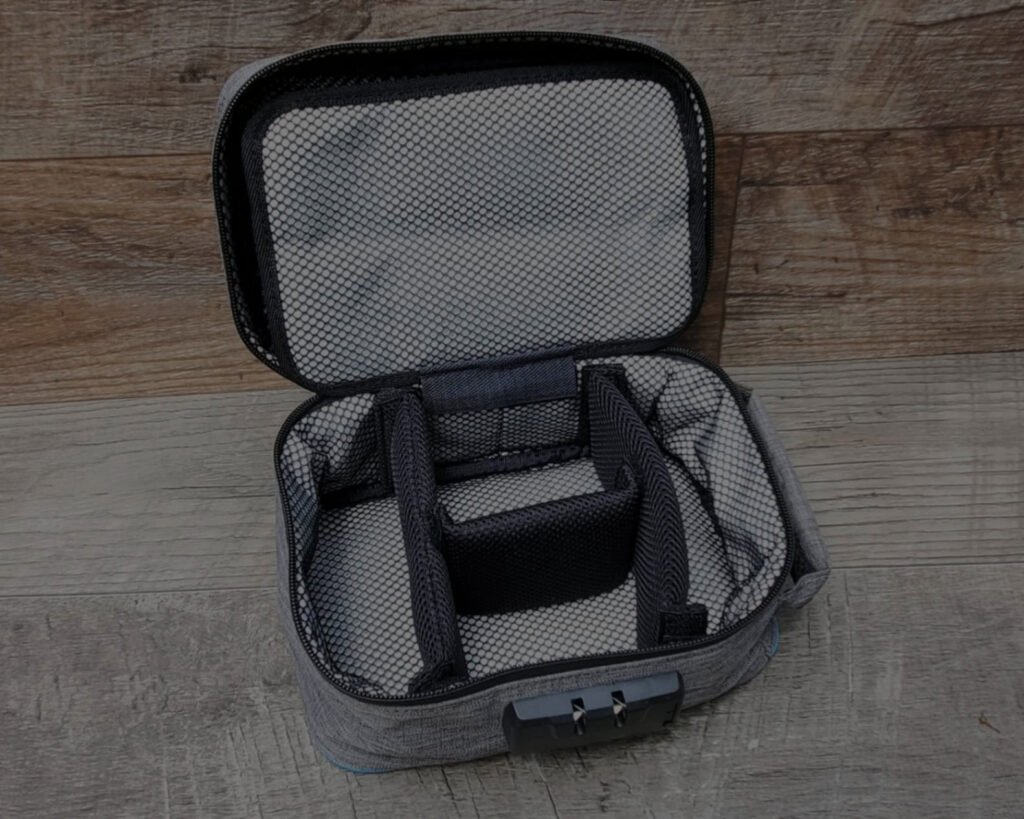
A customized bag factory allows you to integrate specific tech features that set your brand apart. Whether it’s an integrated combination lock, custom-colored activated carbon, or unique pocket layouts, customization is the key to escaping the “commodity trap.” In the 2026 market, the brands that win are those that provide high-end, bespoke odor proof bags for weed tailored to specific lifestyle niches.
10. Conclusion: Securing Your Brand with Precision Engineering
10.1 Why Airtight and Breathable Technologies Should Be Layered
The future of odor control lies in “Layered Defense.” The ultimate stink proof bags for 2026 combine a hard-shell scent proof box for bulk storage with a carbon-lined smell proof pouch for daily mobility. By layering these technologies, you ensure that no single failure—like a forgotten zipper or a saturated carbon layer—leads to a catastrophic scent leak.
10.2 Final Checklist: 5 Things to Ask Your Smell Proof Bags Supplier at the Fair
Before finalizing your next wholesale order, ask:
- “What is the iodine value of the activated carbon used in your carbon bags?”
- “Do you use solvent-based or solvent-free lamination for your smell proof mylar bags?”
- “Can you provide a lab report on the gas transmission rate of your zippers?”
- “What is the maximum weight capacity of your heat-sealed seams?”
- “How many cycles of ‘open-close’ is your scent proof box O-ring rated for?”